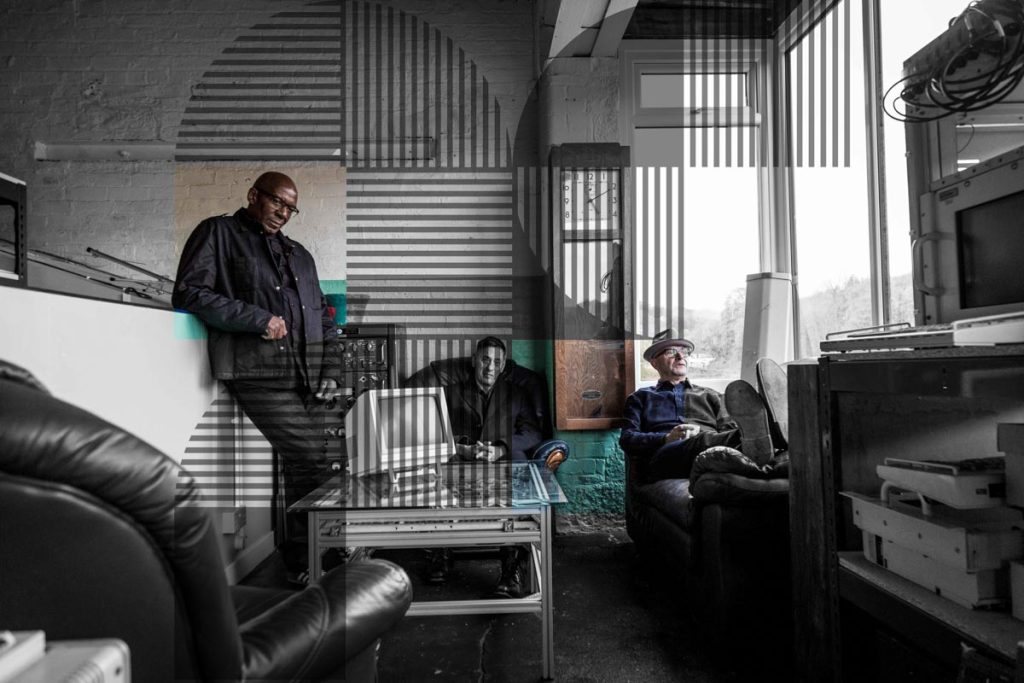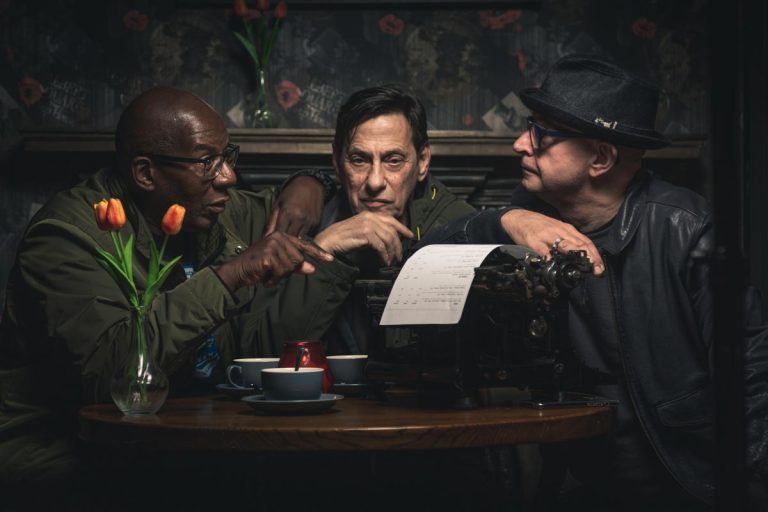
Some bands make you feel included. That you are part of their being. A Certain Ratio are one of those bands and they are producing the best music of their 40 year pioneering, genre breaking career. Resplendent from their life affirming appearances at a series of festivals, including Wideawake and We Out Here and an emotional performance celebrating the life and work of their dearest friend Denise Johnson, the band have announced the release of Loco Remezclada, a collection of entirely new mixes and reworkings of tracks from across their recent catalogue, to coincide with a UK and France headline tour starting on November 3rd 2021.
Giles Sibbald
The music you are producing now, since you returned from your hiatus, is stunning. You’ve been breaking new ground consistently over the years, and always thinking far ahead. How…do you do it?!
Jez Kerr
Breaking new ground is why we did it in the first place. I don’t think we ever discussed what we were doing. We’d just go into the rehearsal studio and be like ‘listen to this, check this out.’ The impetus was on writing the next tune, not about how good I can play this tune. That’s always been our way. We were always playing the next album when people wanted to listen to the album that we’d just put out. When we started out, we used to have our backs to the audience, you know but that was just because we were just totally into our thing. And being into our thing has not changed.
Sextet is still my favourite record. We had two tunes – one called Staccato, the other was Crystal – written before we went into the studio, but the rest of them we wrote in the studio. But we’ve realised, since we started writing again, that that’s the way to do it. Just having confidence in yourself and it’s all about the vibe. It’s always best when it’s fresh and you’re in there doing it, and you get the groove and go, right, okay, let’s get a melody. I do all my lyrics in the studio. You know, I’ve got loads of books of lyrics, right. What I do is with the tune going in the control room, I sit outside the control room, on the stairs with all my books and just write the lyrics in the studio in half an hour. For ACR Loco, there were only two that I didn’t write in the studio. We still listen to Sextet now and go ‘how the fuck did we do that?’.
We’ve got the next album done. About three months ago, we did three months in the studio. So, after the tour in November, we will go back in January to these skeleton tunes. Four of them are hits already. There’s a tune called 1982 – it’s a fuckin’ stonker. And it’s so simple. That’s the way we’ve always done it.
Martin Moscrop
It’s all about discovery for us. We’re really ahead of ourselves at the moment, like we were in 1980-82. In those days, we’d already finished Sextet before To Each came out. At the moment, we’ve got 18 tunes written and recorded, which are going towards the next album. And we’re already planning and talking to people who are involved in the album after that. Mute do tell us that we need to slow down and there’s got to be a gap because you can saturate and confuse the market. I understand that, but our opinion on that is, you know, we’re in our 60s and we want to just make music while we can now. We’re thinking of ways of putting the next album out that are different to the norm. And then do the one after differently. Because we’ve got so much stuff to put out, we’ve got to be creative with the whole process, not only with the writing and production, but with the formats and actual release itself. Having said that, one of the reasons we’re in the position we are now is because of Mute’s productive energy, so they’ve done their side of the job perfectly. But, we’re also here also because we’ve been so productive.
Donald Johnson
I’ll give you an example of how we keep our minds open in the studio: when I’m doing the kit, sometimes I think outside of ‘me’, because I want to be different. I mean it would be dead easy for me to sit there and do usual stuff. And you know, Martin helps me with that sometimes I’ll be running through a track and I’ll get it going and Martin will say now play more of the offbeats are in that section and more than downbeats in this or keep it straight in that, you know, that kind of thing. So collectively, we’re kind of working on the beats then to make it into whatever. It helps because we’re multi-instrumentalists. It’s very freeing.
Giles Sibbald
Loco Remezclada, the remix album, is coming out on 5th November. The tracks are stunning in how they’ve been interpreted by your collaborators. How did you approach it with them?
Donald Johnson
We gave it to them to give us their interpretation. We really wanted them to treat it as their painting. And our whole take on it was, ‘we’ve got you guys because we like your sensibility of what you do’. Remember, when you live in your own mind all the time, you don’t hear it like everybody else and that’s what I love about the album; we would never have taken the avenues they have. And remember that we’re the inventors – we’ve seen each track at Point Zero -so to see them ascend to another level in someone else’s mind is just great. Y’know, Yo Yo Gi sounding….not like Yo Yo Gi…wow!
I’ve heard it I probably once or twice so I know what a good job they’ve done with it. I’ve deliberately kept away from it since then until it’s closer to the time so I can then appreciate it all over again. I don’t want it to be stale for me when it comes out. I can’t wait to get that ‘oh wow’ feeling when I hear it again!
Martin Moscrop
And let’s remember that more than 50% of the tracks on Loco Remezclada are remixed by women. Women are producing some of the best music out there.
Giles Sibbald
You could probably put a very good case forward that the approach you are taking is to empower others to improve themselves by giving them the freedom to interpret and re-create. That’s actually a pretty cool legacy.
Donald Johnson
Take Maria and Gemma from Sink Ya Teeth. I think they’ve got exactly that freedom mindset. That’s the kind of thing that we could hear. We love the sparseness of their production. You don’t need to be Art of Noise, you need to be you. I think the problem you have with probably some other bands that get stuck in their genres is that they’re afraid to be different. Because they want to be liked. And some people are making the music to fit within the constraints of social media platforms. One of the things about ACR is we’re not arsed about whether we’re liked, we’re arsed about whether people like our music. We’re arsed about leaving a good piece of music. Some people just come along – Miles Davis, Hugh Masakela, Kraftwerk, Bolan, Bowie – and it’s just ‘this is what we do’. They’ve all got certain bodies of work that are study pieces forever. Just look at Herbie Hancock’s early albums in the 80s with headphones. I’ve listened to those probably as often as anyone can, and I’m still being blown away by things that I’m hearing and the riffs and timings and grooves and things that are just happening.
Giles Sibbald
To me, your music is very democratic and inclusive because there is such a variety of instruments, influences and collaborators and that makes it accessible to so many people – percussion, Latin rhythms, jazz, funk, dub, sax, trumpet. It feels to me like the way that you mix all those elements together allows people from all walks of life, who have their own favourite sounds, instruments and influences to imagine and hear a bit of themselves in the tunes. How do you put it all together to achieve that?
Jez Kerr
Yeah, well we first started off as an industrial Throbbing Gristle. We didn’t even have a drummer! But we did that for a few months, did the
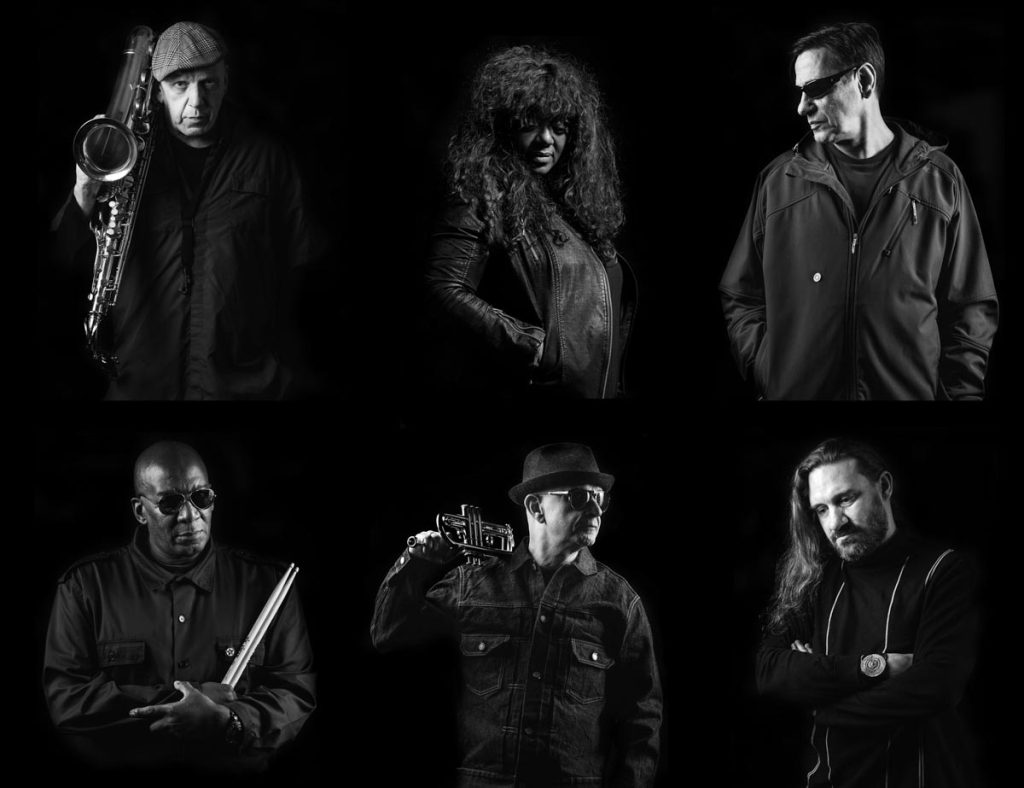
single and a few gigs out and about so we had a set of about 25 minutes in those days. And, you know, the bass and guitar were the rhythm really. And that really affected the way that I played. And then when Donald came in, we just played our set, and he just played the drums and gave us a lot more space. That’s how Flight was born, through that space. Then, it was all about – just like Joy Division and all those other bands – being in the rehearsal room four or five days a week playing together to develop not only our sound, but the way that we were as musicians. You need to listen to what the other person is doing and fit around that, you know, it’s all about complementing. The three of us, we’re really competitive.
We never talked about what we were doing in the early days, we’d be expressing ourselves through what we were playing. And that’s what was brilliant about it. The best place to be is to not know exactly what you’re doing. If you know what you’re doing, you’re a bit fucked. Whereas, if you don’t know what you’re going to produce, like Miles Davis, you just need a starting point and everybody else needs to come together and that’s it. That’s where the creativity comes from.
We’ve never limited ourselves. We’re independent in that we pay for the albums we make, so our musical creativity can be unlimited. That’s how it’s been since we left Factory really. Martin manages us on a day to day basis. And he is brilliant at how he’s, along with Mute, guided us into this position.
We’ve still not been playlisted though. We had loads of plays for Emperor Machine and Keep It Together, which are really good radio songs right but forty years, guys, come on! We’ve always been a bit of an afterthought.
Martin Moscrop
We’re all massive music lovers and we’ve had so many years of listening to music that our tastes and the different styles of music that we’ve been through are so diverse. A lot of it stems from our early years of listening and discovering. Me and Jez would take acid and mushrooms and listen to new stuff all the time. It would blow our minds, you know, and that embeds in your head. That trip just never leaves you. That buildup of stuff over the years is what’s made us who we are today. The other thing that makes the music like that is, like Jez said, me, Jez and Don are all quite strong characters within the band and we’re all vying to be the best in the band. Almost like football team where you want to be the best player on the pitch, and that competition makes us what we are as well.
Donald Johnson
When we were younger and learning how it worked, we probably did get a bit precious about things. But we’ve learnt how to give it up and trust – that’s important. When I really don’t like something, I’ll analyse the reasons why and I’ll give it to someone else that I trust to make it work. It might take months for me to come back to it and then it’ll be “Ah, I get it now”. If it’s no good, we’ll collectively dismiss it instantly.
Martin Moscrop
Souls In The City Part Two was inspired heavily by Summon The Fire by The Comet Is Coming, which is like this really psychedelic pumping track with really heavy sax on it. We’re really blessed that the sort of people that listen to us, could be into jazz or pop music or dance music or indie music and you may have groups of fans who listen to all those styles like we do. So, it’s quite hard to put us into a category really. The reason we do go into that indie category is because we were on Factory Records. No other reason. If you wiped out that whole Factory phase and maybe started at the Rob’s Records era, we wouldn’t be categorised as an indie band. We do get some association with the Madchester era as well. I’d prefer to be categorised as World Music if we had to have one.
The playlist thing is a bit disappointing because we’ve had so many good singles out in the last, you know, last nine months. We don’t know whether they get put off by the fact that we’ve been about for so long, and we’re not a new band, you know? If they don’t like Dan Carey’s mix of Down and Dirty, we’re gonna give up!
Donald Johnson
The thing we’ve got, which is always good for us, is that we’re all multi-talented in the sense that we can do lots of different things – we play different instruments, we can all produce, we can all engineer to a degree. The one thing we don’t do is get in the way of each other. We will relinquish some form of control to somebody else to do their thing, so we have an eclectic way of colliding together. Even if it’s subliminally without knowing it.
Giles Sibbald
Manchester, for me, was progressive in how it reacted to and emerged from punk’s first blast – you, Joy Division, New Order, The Fall, John Cooper Clarke, Durutti Column, The Smiths, Big Flame for example. The stuff that was emerging always felt very forward looking and open minded.
Jez Kerr
Yeah. Great bands. And you know, we didn’t even get a chance with Britfunk cos we were too punk! So, we’ve always missed the boat, but we were always on our own boat. Still are. That’s what’s interesting about us. Take that gig at Wide Awake (Festival): a lot of the people there were probably 18 or 19. They’ll never have seen us before but might have heard the name and maybe heard this and that but to know what we’re about, you need to stand in front of us. And they did. And they fucking get it now. Y’know, we lost our audience early on. We were industrial to start with, then we started playing funk because we saw a samba band in New York. And then everybody’s like ‘what the fuck’s this? Wythenshawe Jazz Band?!’ We wanted to move on. That’s why Sextet happened, which got slated when it came out. It got re-released in 2000 and whatever and everybody is saying this is now a seminal album.
Martin Moscrop
We’re very proud Mancunians. We’ve always been in touch with the city. I think it’s really important. I think the fact that it can be a very miserable rainy place in the winter makes you hibernate and be creative through music, art, crafts, making furniture, whatever. Manchester in the late 70s and early 80s was a quite depressing place with lots of derelict buildings. Nearly the whole of Oldham Street was derelict and then when Dry Bar opened, it started blossoming musically and creatively. The other thing that’s so important about Manchester’s progress in music is being blessed with really great nightclubs and venues. I don’t just mean the Hacienda, but smaller places like Legend, Fever, Berlin, The Gallery, Boardwalk, Night & Day, Friends & Family and Electric Chair nights that were on at the Roadhouse. And now, there’s places like Hidden and the White Hotel in real industrial areas. You can’t even find Hidden that’s why it’s called Hidden! Young people are still carrying on that culture of having these little venues which are doing great things that only a few people know about. I think that’s been an important part in in Manchester’s progress for the city and people who live there.
Giles Sibbald
Where you live is one thing that surrounds you, and the other thing that surrounds you is all the people that you’ve worked with over the years from Tony Wilson to Martin Hannett to Rob Gretton through to Denise (Johnson) who have all been really inspirational people for you in their different ways.
Donald Johnson
I think the difference for us when we started out was the company we kept – Rob Gretton, Tony Wilson, Alan Erasmus, Martin Hannett. They were they were foils that we had when we started out. They didn’t care about, you know, certain protocols. They didn’t care about what the what this sleeve costs.
We had people that wanted to be mavericks and pioneers within the industry. Denise was an irreplaceable pioneer. Today, Ben Guy (vocalist from the band narcissus) has great vision. He tells us things about lyrics that I’ve never thought about. narcissus just put out a single that Ben wrote but he’s not singing on it. That takes massive confidence to do that. He knew instantly that it was someone else that needs to interpret it. And it doesn’t faze him for one single second that he’s not singing. I’m listening to another drummer – Moses Boyd – and a great vocalist Moses Sumney. People like them are inspiring me.
Martin Moscrop
Matt Steele, our amazing keyboard player who can just translate what we’re thinking, Tony’s sax and melodies, Denise up until she passed away and now Ellen (Beth Abdi) our new singer – having those people together in a room is like heaven when you’re trying to make music. Going for a six hour rehearsal is not work, it’s like having the best time of your life, you know, and the stuff that comes out of that rehearsal room, it surprises us every time, you know. We can’t stop creating at the moment.
Giles Sibbald
Your imagery is very identifiable and distinctive. What do you think it is that makes the people relate to you?
Martin Moscrop
We’ve been using Trevor Johnson as our designer since we released Wild Party in in 1984. That gives us a visual image that is consistent even though the music isn’t consistent
And also, we listen to the fans quite a lot. We try to get away from just doing the black t shirts – we obviously do them because a lot of the older fans want them – but, when we did ACR Box, we did the ACR Box logo on a really nice purple colour t shirt. It’s nice to step out of rigid uniforms. We did the ACR Loco logo printed on an off-white t shirt as opposed to a white t shirt. We just try to think of different things to make the clothing more appealing as you would if it was a clothing label. Once you get over the paranoia of thinking people might think you’ve got a dirty t shirt or you’ve washed it with your brown socks, you’re ok!
Giles Sibbald
The reworks are obviously really important to you. Why is that?
Jez Kerr
I think it just reflects a different side of you. We’re never ‘just gonna do a dance mix’ for someone else. It’s just not like that for us. We are trying to come up with a good groove and fit in their tune around it. It’s a weird one. The starting point is always different. I mean, on Barry (Adamson)’s I Got Clothes, I think it was me who changed the vocal from 3 / 4 time to 4 / 4 time. We edited the chorus together and once we got that, it was easier to play the drums around it and get the grooves around it. That was really exciting.
Martin Moscrop
We’ll also put an ACR vocal in the rework. So, whoever we’re doing the rework for comes out with a bit of an ACR record. Funnily enough, doing those reworks is what made us get back into writing. We were going into the studio and doing all these tunes for other people and each one we did got better and better. We enjoyed it to the point where we thought we should be doing our own. And that’s when we started recording the ACR Loco album.
Donald Johnson
Our principal is always ‘how can we take it to a different level?’ It’s how we approach every one of our reworks. We’re not here to change the artist or make them be something they’re not, but if we can’t do something at a level that makes it evolve or if we’re having to work too hard to try and feel it, we just don’t do it. It’s as simple as that. It’s got to come organically. It’s got to have its own natural flavour. Reworks make us rethink ourselves – that’s why they are fantastic for us.
Giles Sibbald
What themes are coming through in the lyrics for the new material that you that you’re writing, Jez?
Jez Kerr
For me, it’s about the verses. The choruses come after. I’ve got books full of lyrics. It’s just things that resonate with me. Yeah, like kids talking to each other – the language they use is completely different. If you can catch a good phrase in a song, that can make all the difference. I mean I never was good at it, and I don’t profess to be good at it, but I’m getting better. I mean it takes years to get and it’s not about knowing what you’re doing, it’s just having the confidence to do it and say it’s great. It’s all about confidence. I love working together with people. Take Wonderland: me and Denise wrote that in the studio. The tune was all done in one day and I was late to the studio, so I didn’t actually play on the tune. The jam was Donald and Matt, our keyboard player, on bass. Martin put his guitar on, Tony put his sax on. And I was reading the poem in Through The Looking Glass and thought ‘this is perfect’. Thank fuck it was in the public domain!
Donald Johnson
Martin and me probably forget sometimes that Jez ended up in that position. We’d lost Simon and we needed singer. Jez really wasn’t sure that he was the one to do it at the start, because he’s the first thing people see up front and he has to deliver it. I’ve got this massive kit that I can go and hide behind – he’s stood there like naked guy! So it does take a lot of confidence to be able to walk out there and believe in your ability to do it. But he’s totally got it now!
Giles Sibbald
What’s the future for culture?
Martin Moscrop
I think the aftermath of where we are now is going to be people enjoying themselves and liking each other more. That can only be a good thing for the creative industries. I noticed that the festivals that we played, and the nights I have been to, since lockdown ended was DJs are getting away with playing cheesy music. People all want to sing and put their arms around each other. So, once we get over that we can get back into the serious stuff and there are so many good promoters putting on brilliant festivals. From what I’ve seen so far from We Out Here and Wide Awake Festival, the country is going in the right direction as far as music goes.
When me and Jez DJ as ACR Sound System, I tend to want to play tunes that people haven’t heard before, because I think my job as a DJ is to educate people and turn them on to new things. Jez will do that as well, but he’ll also play tunes that people want. So, we’re DJ’ing at Freight Island tomorrow at a pre-New Order show. And it’ll just be full of New Order fans. There is no way in the world I’m playing a New Order tune at that gig, which is what everyone’s gonna want! But I want to play tunes where those New Order fans come up to us and say to me ‘Excuse me, what’s that tune?’ That’s the biggest kick you get as a DJ. When you think about the first time, you’ve heard a tune that you’ve never heard before, and you think, Wow, what’s this? That’s the best feeling in the world, you know? And I see my role as a DJ and musician is trying to get people to have that feeling as many times as possible.
Loco Remezclada is out on 5th November 2021 on Mute Records
https://www.acrmcr.com
Words – Giles Sibbald
Colour Photos – Paul Husband
Black and white photos – Paul Husband & Danny Bird