A spellbinding storybook of dreams and nightmares – Jarboe

Jarboe. A name synonymous with iconoclastic, incomparable performance art. The living legend inhabiting a mystic world where reality, mortality, sacrifice, reinvention, eroticism, and black humour are satiated through the artistic crucible of seduction and malevolence, tenderness and brutality. A songwriter, performer, recording artist and visual artist drawing from a childhood in America’s south, drawn to life in New York City’s East Village and the abrasive, experimental noise of Swans and an uncompromising solo career.
1995. Four years since her solo album Thirteen Masks, Jarboe – who was at the same time working in Swans – created the album Sacrificial Cake, recorded in New York’s East Village. Swans founder, Michael Gira, simultaneously released his album, Drainland.
2022. Sacrificial Cake will be released, this time on its own. An extraordinary album of angelic voices and infinite nightmares conveyed through Jarboe’s emotive exploration of personae and metaphors.
We start off with Jarboe’s insights into this important record and her use of personae and language…..

Jarboe

Well, in discussing some tracks on Sacrificial Cake, The Body Lover is a really good example of both of those things – it is from the point of view of being a grave digger. It’s an old fairy tale that’s meant to be taking place in England in the olden days, using a language that references something of Dickens. And this man has gone to have some fun – the pub or whatnot. He’s been paid in pounds. But ‘pounds’ are double entendres – pounds of flesh, and then British pounds, money. He’s a molester who’s fondling corpses. 

‘He’s slushing down these roads of blood 
Tonight he’ll own the meat and mud 
He’ll drink these streets
He’ll eat this blood’

The whole visualisation just came to me, and I was completely inspired. I could see it vividly, you know. And then you counter that with of course, the whole ‘Troll’ series. That was inspired for something that I saw as a kid. I made the mistake of taking some LSD in my bedroom, and I saw this thing appear at the doorway, bow its head because it was too tall to get in the doorway, and come inside, and it was this troll. And so, I wrote this piece based on that experience, right? A lot of the pieces on Sacrificial Cake are related to those experiences that I had when I was a teen and experimenting with things and, and then my love – which I still have – for the art and visuals of Morocco. I’ve always been attracted to that. That’s what the track Shimmer is referencing. And Deflowered is absolutely about women in music at that time, what’s expected from you to make it in music and the price that you’ll pay, you know. The reference is for the informed to understand the metaphor

‘Make all the critics cream
Just get down on your knees
Learn how to scream and seize
Every “opportunity”
You’ll make them beg for it
You’re one tough rockin’ bitch
You got a lot to show
On college radio’

I mean, what is she doing there? Yeah, she’s doing that! So, it’s talking about you’ve got to go that far to sell yourself and make your way up. And so Deflowered is my giving the finger to the music business.

Giles

Your lyrics, and the way you deliver them are full of expression – humour, trauma, fantasy and as we heard with a double meaning – and then something like the totally hypnotic Not Logical, alternating between sung and whispered. Can you tell us a bit more about how you have experimented with, or learned from, language and delivery?

Jarboe

Well, I’ve researched the use of antiquated expressions and words throughout literature, and odd turns of phrase, that kind of thing, like, Ode to V (track on Sacrificial Cake) are words that are either reference to female orgasm or the vagina. I also did it with Red (track on 1991’s Thirteen Masks), which, Jim Thirlwell produced, and this ‘red’ is about the different meanings and interpretations of that powerful attention-getting colour. So, I researched all the tongue in cheek and humourous turns of phrase for the word ‘red’. That was a deliberate exploration into words and language, then saying them as fast as I could, making them kind of rhyme and jokey kind of phrases. That was a fun experiment. 

‘red as china, rubies, leather bridles, stirrups, sticky gooey syrup,
red as caviar, mars, red hell, red stripe, life,
red as Jack the Ripper’s surgical knife’

My major in school was English literature, and I always did really well with that and grammar and English at school. All the teachers thought I was going to be a writer and really pushed me to read. Oh, gosh, I was reading James Joyce, Henry James, and all kinds of stuff. I remember when my mother picked up some of the books the teachers were giving me as extra-curricular reading, she was horrified. She thought it was inappropriate. But, it was very appropriate, you know, because then I moved on to Ingmar Bergman films and Herman Hesse, all kinds of incredible books and literature as a kid and as a teenager. I’m so grateful for all these writers because they expand your brain. I love getting into some good fiction. I feel an intimate connection, like I can enter that world and just really be lost in it. I would encourage anyone to do this. I do have a digital reader, but I prefer physical books – I love holding them and turning the physical page. It’s like I have a relationship with it, but I think I only felt this way after I actually got rid of my entire book collection (as well as my entire vinyl collection). So I had, gosh, I’m not exaggerating, two full walls floor to ceiling of bookshelves – thousands of books. I went through this phase of purging every single thing I owned. I donated every single one of my books to Books For A Better World. And so now I’ve started over the past couple of years longing for books again – it’s an addiction I can’t shake {laughs}. So, I’ve actually re-bought some of the books I’ve donated but some of them are first editions that you can’t buy anymore because they’re now collector’s items. But I purged everything I owned. I got down to nothing at all. I’m talking furniture, clothes, many things gathered from tours, all kinds of wonderful things. All donated. I had to get to that place where I could carefully curate a fresh start and also to see what it was like to have less. So now if I buy something new, I get rid of something else, so I don’t become a hoarder or feel burdened by material things. 

Giles

This is relevant to the language and meaning topic, but you’ve consistently performed with this unique ability to create hugely conflicting feelings within your music either within tracks themselves or the whole album – dream versus reality, familiar versus unfamiliar, paradise versus purgatory, angelic versus demonic, humour and discomfort. For me, personally, I can trace that back to In My Garden on Children of God (Swans’ 1987 album). 

Jarboe

As to my sense of humour, the rap version of Come Out on skin is that sense of humour deliberately coming through. The whole concept of the skin collection of songs was expressed in the title. Of course, there are different perspectives of roses, and they take on a different significance on their own and they have a different side in the relationship between roses, blood and the menstrual cycle. The whole concept of the skin, which I touched on in the rap, you know, was that skin was referring to an adult, you know, device {laughs} And I’m absolutely not an advocate of guns {laughs}, so I think my audience understood that that was a metaphor. It’s always been a metaphor when I’ve used that word. I think that it was successful in that it definitely explores the different sides of sexuality and oneness, you know, as it were. I listened to it again, obviously, when we were doing the remastering with the wonderful engineers of Consouling Sounds and it’s really impressive. The full string section on 1000 Years, that’s not something anyone does these days. It was quite perverse humour in a way to have the Come Out song back to back with Man I Love  {laughs}  – the vocal is deliberately coy and breathy, you know, almost a Marilyn Monroe kind of breathy. A coy play, I guess is what I’d say. I always assume that there is intelligence and sensitivity in the audience for that. 

Anyway, I’m thrilled that Sacrificial Cake is coming out on vinyl (in beautiful lavender vinyl and packaging in homage to the track Lavender Girl) and I’m thrilled that skin blood woman roses is already out on vinyl. They’re both beautiful and I’m grateful to everyone involved. 

Giles

Turning to the music you’ve produced in more recent years; I really think that Illusory is also up there as one of your best along with Sacrificial Cake and skin. It’s another fabulous piece…

Jarboe

Oh, thank you, I have to say, that’s my heart when I play that album – I really gave it everything I had. I worked on it laboriously. Every detail is important to me to the point of making things you know, at times quite raw. For the version of Man of Hate on that album, my voice is quite raw and without effects to really make it sound plaintive. I also bring in a trademark of mine, which I hope people see, but perhaps some people don’t, which is this black humour. I have a very powerful sense of humour in my work – not a ‘hahaha’ sense of humour and ironic is not the word either – it’s dark…kind of a nod. I sing in this little angelic voice through the song – ‘love, love, love, true love’ – and then towards the end, right when I’m about to say ‘true love’, there’s the sound of a guillotine and a head being chopped off, and then there’s applause. It’s brutal. The sound I left at the end – the drone – that’s a nod to when I was in Swans when I would tape down a key on the keyboard, and we’d walk off the stage, and you would just hear that drone. So, that was a nod to performance as well as to, well, the world. At the time, I was thinking of a particular leader in this country and what a perfect time it was to do this and to perform it live. But now, with the way things have changed, with the situation between Ukraine and Russia, I cannot in good faith perform that right now. I don’t want to bring it down any darker than it already is. So, I’m going to be approaching the set in a different way, revisiting what I did for NecronomiCon, which is the Literary Festival in Providence, Rhode Island. I’m also going to be performing on a MacBook Pro, in addition to the vocals, and then working with Peter Emerson Williams, the guitarist, doing electric guitar with loops and drones. I was going to do the keyboards again, like on the 2020 tour, and then I thought, actually I can get all those sounds and be much better if I simply do them with a controller keyboard and access the computer. And that’s quite a challenge – I’m still learning. But I want people to be relaxed and give it more of a meditative experience. I don’t want to go into any place that’s going to be too obviously dark given where we are – that’s the last thing I want to bring live.

Giles

What have you learned about yourself and what drives you to create your art?

Jarboe

For me, my art is just intuitive based. I don’t have a strategy or a plan other than listening to the inner voice and trying to respect my relationship with myself. I don’t have any outside influences. I’ve always been reclusive and a loner – I have just a very few close friends. My mind is always working on some ideas and creativity. It doesn’t have to be music; it could be anything at all. And so, I’m very happy because I know how to keep myself entertained, happy and busy without needing anyone at all. My childhood was almost like being an only child as my brothers were a lot older. I’m sometimes hard to get to know and I’m a kind of an aloof, distant person. Of course, this can work to your disadvantage if you go into the music business. But I don’t really want anything to do with the music business, I consider myself a musician and artist who is using music, but I never really aspire to anything other than having an idea and fulfilling that idea. Before I was in Swans, I was doing electronic, highly experimental work and that whole realm was more appropriate for an art gallery and for audio installations, which I did. When I discovered music that was different, you know, it was challenging initially and then different – like SPK and Cabaret Voltaire  – and one of them I heard on this show was Swans and so with Swans and Einstürzende Neubauten there was something about both of those groups that spoke to me.  I went to New York to interview and meet Swans for a little art zine that I had. And then I loved the neighbourhood and those days and the artists that I met, you know, like Lydia Lunch and Jim Thirlwell. It was a really interesting neighbourhood; it was quite funky. And of course, it’s not anymore, but it had a very, you know, DIY vibe to it. It was just culturally very inviting. It was like, this little niche, maybe like Berlin was in the 80s before the Wall came down, you know, a small enclave of artists. I think that’s what propelled me to come up there to be part of it. But again, it was like beating your head against the wall for years and years and years because there was no compromise, there was no-one sounding like us, no-one doing what we were doing. When Michael introduced the acoustic guitar and these ballads, and when the door was opened to my training in music (I had training in playing the organ, singing and in choirs) and all my musical input, the entire direction of the band began to change, you know. We went through all these phases, culminating in something as radical as Love Will Tear Us Apart. So suddenly, we were doing some crazy eclecticism from I Crawled to Love Will Tear Us Apart. But we still had this like interior isolation, you know, like we didn’t hang out, we weren’t making the scene or working the room. That’s the opposite of us and that fits my personality because I don’t do that stuff, either.

Jarboe

Well, in discussing some tracks on Sacrificial Cake, The Body Lover is a really good example of both of those things – it is from the point of view of being a grave digger. It’s an old fairy tale that’s meant to be taking place in England in the olden days, using a language that references something of Dickens. And this man has gone to have some fun – the pub or whatnot. He’s been paid in pounds. But ‘pounds’ are double entendres – pounds of flesh, and then British pounds, money. He’s a molester who’s fondling corpses. 

‘He’s slushing down these roads of blood 
Tonight he’ll own the meat and mud 
He’ll drink these streets
He’ll eat this blood’

The whole visualisation just came to me, and I was completely inspired. I could see it vividly, you know. And then you counter that with of course, the whole ‘Troll’ series. That was inspired for something that I saw as a kid. I made the mistake of taking some LSD in my bedroom, and I saw this thing appear at the doorway, bow its head because it was too tall to get in the doorway, and come inside, and it was this troll. And so, I wrote this piece based on that experience, right?

A lot of the pieces on Sacrificial Cake are related to those experiences that I had when I was a teen and experimenting with things and, and then my love – which I still have – for the art and visuals of Morocco. I’ve always been attracted to that. That’s what the track Shimmer is referencing. And Deflowered is absolutely about women in music at that time, what’s expected from you to make it in music and the price that you’ll pay, you know. The reference is for the informed to understand the metaphor

‘Make all the critics cream
Just get down on your knees
Learn how to scream and seize
Every “opportunity”
You’ll make them beg for it
You’re one tough rockin’ bitch
You got a lot to show
On college radio’

I mean, what is she doing there? Yeah, she’s doing that! So, it’s talking about you’ve got to go that far to sell yourself and make your way up. And so Deflowered is my giving the finger to the music business.

Giles

Your lyrics, and the way you deliver them are full of expression – humour, trauma, fantasy and as we heard with a double meaning – and then something like the totally hypnotic Not Logical, alternating between sung and whispered. Can you tell us a bit more about how you have experimented with, or learned from, language and delivery?

Jarboe

Well, I’ve researched the use of antiquated expressions and words throughout literature, and odd turns of phrase, that kind of thing, like, Ode to V (track on Sacrificial Cake) are words that are either reference to female orgasm or the vagina. I also did it with Red (track on 1991’s Thirteen Masks), which, Jim Thirlwell produced, and this ‘red’ is about the different meanings and interpretations of that powerful attention-getting colour. So, I researched all the tongue in cheek and humourous turns of phrase for the word ‘red’. That was a deliberate exploration into words and language, then saying them as fast as I could, making them kind of rhyme and jokey kind of phrases. That was a fun experiment. 

‘red as china, rubies, leather bridles, stirrups, sticky gooey syrup,
red as caviar, mars, red hell, red stripe, life,
red as Jack the Ripper’s surgical knife’

My major in school was English literature, and I always did really well with that and grammar and English at school. All the teachers thought I was going to be a writer and really pushed me to read. Oh, gosh, I was reading James Joyce, Henry James, and all kinds of stuff. I remember when my mother picked up some of the books the teachers were giving me as extra-curricular reading, she was horrified. She thought it was inappropriate. But, it was very appropriate, you know, because then I moved on to Ingmar Bergman films and Herman Hesse, all kinds of incredible books and literature as a kid and as a teenager. I’m so grateful for all these writers because they expand your brain. I love getting into some good fiction. I feel an intimate connection, like I can enter that world and just really be lost in it. I would encourage anyone to do this. I do have a digital reader, but I prefer physical books – I love holding them and turning the physical page. It’s like I have a relationship with it, but I think I only felt this way after I actually got rid of my entire book collection (as well as my entire vinyl collection). So I had, gosh, I’m not exaggerating, two full walls floor to ceiling of bookshelves – thousands of books. I went through this phase of purging every single thing I owned. I donated every single one of my books to Books For A Better World. And so now I’ve started over the past couple of years longing for books again – it’s an addiction I can’t shake {laughs}. So, I’ve actually re-bought some of the books I’ve donated but some of them are first editions that you can’t buy anymore because they’re now collector’s items. But I purged everything I owned. I got down to nothing at all. I’m talking furniture, clothes, many things gathered from tours, all kinds of wonderful things. All donated. I had to get to that place where I could carefully curate a fresh start and also to see what it was like to have less. So now if I buy something new, I get rid of something else, so I don’t become a hoarder or feel burdened by material things. 

Giles

This is relevant to the language and meaning topic, but you’ve consistently performed with this unique ability to create hugely conflicting feelings within your music either within tracks themselves or the whole album – dream versus reality, familiar versus unfamiliar, paradise versus purgatory, angelic versus demonic, humour and discomfort. For me, personally, I can trace that back to In My Garden on Children of God (Swans’ 1987 album). 

Jarboe

As to my sense of humour, the rap version of Come Out on skin is that sense of humour deliberately coming through. The whole concept of the skin collection of songs was expressed in the title. Of course, there are different perspectives of roses, and they take on a different significance on their own and they have a different side in the relationship between roses, blood and the menstrual cycle. The whole concept of the skin, which I touched on in the rap, you know, was that skin was referring to an adult, you know, device {laughs} And I’m absolutely not an advocate of guns {laughs}, so I think my audience understood that that was a metaphor. It’s always been a metaphor when I’ve used that word. I think that it was successful in that it definitely explores the different sides of sexuality and oneness, you know, as it were. I listened to it again, obviously, when we were doing the remastering with the wonderful engineers of Consouling Sounds and it’s really impressive. The full string section on 1000 Years, that’s not something anyone does these days. It was quite perverse humour in a way to have the Come Out song back to back with Man I Love  {laughs}  – the vocal is deliberately coy and breathy, you know, almost a Marilyn Monroe kind of breathy. A coy play, I guess is what I’d say. I always assume that there is intelligence and sensitivity in the audience for that. 

Anyway, I’m thrilled that Sacrificial Cake is coming out on vinyl (in beautiful lavender vinyl and packaging in homage to the track Lavender Girl) and I’m thrilled that skin blood woman roses is already out on vinyl. They’re both beautiful and I’m grateful to everyone involved. 

Giles

Turning to the music you’ve produced in more recent years; I really think that Illusory is also up there as one of your best along with Sacrificial Cake and skin. It’s another fabulous piece…

Jarboe

Oh, thank you, I have to say, that’s my heart when I play that album – I really gave it everything I had. I worked on it laboriously. Every detail is important to me to the point of making things you know, at times quite raw. For the version of Man of Hate on that album, my voice is quite raw and without effects to really make it sound plaintive. I also bring in a trademark of mine, which I hope people see, but perhaps some people don’t, which is this black humour. I have a very powerful sense of humour in my work – not a ‘hahaha’ sense of humour and ironic is not the word either – it’s dark…kind of a nod. I sing in this little angelic voice through the song – ‘love, love, love, true love’ – and then towards the end, right when I’m about to say ‘true love’, there’s the sound of a guillotine and a head being chopped off, and then there’s applause. It’s brutal. The sound I left at the end – the drone – that’s a nod to when I was in Swans when I would tape down a key on the keyboard, and we’d walk off the stage, and you would just hear that drone. So, that was a nod to performance as well as to, well, the world. At the time, I was thinking of a particular leader in this country and what a perfect time it was to do this and to perform it live. But now, with the way things have changed, with the situation between Ukraine and Russia, I cannot in good faith perform that right now. I don’t want to bring it down any darker than it already is. So, I’m going to be approaching the set in a different way, revisiting what I did for NecronomiCon, which is the Literary Festival in Providence, Rhode Island. I’m also going to be performing on a MacBook Pro, in addition to the vocals, and then working with Peter Emerson Williams, the guitarist, doing electric guitar with loops and drones. I was going to do the keyboards again, like on the 2020 tour, and then I thought, actually I can get all those sounds and be much better if I simply do them with a controller keyboard and access the computer. And that’s quite a challenge – I’m still learning. But I want people to be relaxed and give it more of a meditative experience. I don’t want to go into any place that’s going to be too obviously dark given where we are – that’s the last thing I want to bring live.

Giles

What have you learned about yourself and what drives you to create your art?

Jarboe

For me, my art is just intuitive based. I don’t have a strategy or a plan other than listening to the inner voice and trying to respect my relationship with myself. I don’t have any outside influences. I’ve always been reclusive and a loner – I have just a very few close friends. My mind is always working on some ideas and creativity. It doesn’t have to be music; it could be anything at all. And so, I’m very happy because I know how to keep myself entertained, happy and busy without needing anyone at all. My childhood was almost like being an only child as my brothers were a lot older. I’m sometimes hard to get to know and I’m a kind of an aloof, distant person. Of course, this can work to your disadvantage if you go into the music business. But I don’t really want anything to do with the music business, I consider myself a musician and artist who is using music, but I never really aspire to anything other than having an idea and fulfilling that idea. Before I was in Swans, I was doing electronic, highly experimental work and that whole realm was more appropriate for an art gallery and for audio installations, which I did. When I discovered music that was different, you know, it was challenging initially and then different – like SPK and Cabaret Voltaire  – and one of them I heard on this show was Swans and so with Swans and Einstürzende Neubauten there was something about both of those groups that spoke to me.  I went to New York to interview and meet Swans for a little art zine that I had. And then I loved the neighbourhood and those days and the artists that I met, you know, like Lydia Lunch and Jim Thirlwell. It was a really interesting neighbourhood; it was quite funky. And of course, it’s not anymore, but it had a very, you know, DIY vibe to it. It was just culturally very inviting. It was like, this little niche, maybe like Berlin was in the 80s before the Wall came down, you know, a small enclave of artists. I think that’s what propelled me to come up there to be part of it. But again, it was like beating your head against the wall for years and years and years because there was no compromise, there was no-one sounding like us, no-one doing what we were doing. When Michael introduced the acoustic guitar and these ballads, and when the door was opened to my training in music (I had training in playing the organ, singing and in choirs) and all my musical input, the entire direction of the band began to change, you know. We went through all these phases, culminating in something as radical as Love Will Tear Us Apart. So suddenly, we were doing some crazy eclecticism from I Crawled to Love Will Tear Us Apart. But we still had this like interior isolation, you know, like we didn’t hang out, we weren’t making the scene or working the room. That’s the opposite of us and that fits my personality because I don’t do that stuff, either.

Giles

I’m an introvert and can empathise with the ‘working the room’ situations. Growing up, I definitely felt a pressure from my parents to conform to their ideas of what a “career’ should look like, to play classical music and to conform to their ideas of what constituted “good music” – either playing or listening. I ended up bothering about what other people thought of me up until about 5 years ago. 

Jarboe

I would definitely say I’m an introvert as well. I certainly was growing up and I also had the same pressure from my father, who was very talented musically as a hobby. When I was a toddler, he had me singing here singing there, just noticing that note, to see if I was tone deaf or if I could carry a tune. And when he saw that I could carry a tune, he pushed the music and so he paid for all these lessons. He pushed me into choirs and all this stuff like voice lessons. And I also went into the rebellious phase where I embraced the hardcore scene, so I can relate to what you’re saying with the pressure to take these lessons. I was constantly being trotted out when guests would come over to sit at and play the organ for them. I was entertainment for the guests. And I hated that. I’m sure that there was no intention of anything negative, it just made you feel like you had to deliver. Also, the lessons were very rigorous and unbending. I started to play songs in the way I interpret them from a very young age, but the teacher would say, ‘No, no’, blah, blah, blah. That carried over into the voice lessons where I was told ‘this is improper singing; you have to get rid of all the breath’. And I hated that. And then there was this argument of, well, pop music and rock music are not true singing. I disagreed obviously. So, to go from pressuring you to sing Gilbert and Sullivan to wanting to sing like any of the bands that were especially coming out of England at the time. Those were the bands that were inspiring me. So, I realized that I could never fulfil what my father wanted me to be. I don’t think he was ever happy with me. I think he was disappointed in me. 

Giles

How did that make you feel?

Jarboe

I realised that the path that he started me on and encouraged me to follow was on his terms. He died before I joined Swans, so he never heard anything that I produced professionally. I’m sure he would have been horrified at the direction that I went into. I think that my mother was a little more open. She actually met Michael and heard some other recordings that I made. She knew how much it meant to me, so was supportive for that reason. But he wouldn’t have been supportive at all. I think he would have been absolutely aghast. Yes.

Giles

Have you ever felt a distance in the relationship between you and the audience?

Jarboe

I was aware of this censorial nature of Michael which is that he would always want an element of restraint, but not necessarily for himself: if you look at the early Swans tours where he was in his underwear and exposing his butt to the audience, that was extremely physically visceral performance and theatrical to me. And yet, I wasn’t allowed to do that. I had to maintain a certain, I guess you would say, removal and distance from the theatre. I could only take it so far and I had to stop. And it was the same with that particular performance. I then had to compose myself and go back to being a member of the band at the keyboards. I kind of understand that mindset, because, you know, taking it over the edge might or might not be successful. A lot of rock musicians have gone over the edge: Iggy Pop, early in his career, was climbing on broken glass; and I already mentioned what Michael was doing. 

Giles

How did you react to this censorship when you went solo?

Jarboe

I mean, a number of my songs have visceral lyrics: at a show in 2004, I did Centre, which is about a prostitute in in the red light district in Amsterdam getting strangled by a serial killer. In that performance, I was in the middle of the audience on the floor, and I took the microphone cord, wrapped it around my throat, and I was choking myself. So, in that performance, that’s me on my own with no one holding me back. I can go that far into illustrating visceral lyrics. But I decided to stop doing that after the 2012 tour, and the reason was this: I liked this idea of getting off the stage and doing the show from the audience, and it was working up to a certain point, but I realised that I was scaring people. I’d look at their faces and they were afraid of me. Then, there was a show I did in Prague, I think. I was doing this thing at the very end where I‘d have my head low, go up to people and look into their eyes to see if they were frightened or not. And you could see the smile on their face, like they were not afraid. So, then I would open my arms, and we would hug each other, right? It was like this waltz at the end of the set where we were openly hugging. Anyway, I went to the back of the room, and there’s a guy and I looked at him and I couldn’t read his face, he seemed kind of neutral. And he was at the very end of the room. And so, I went ahead and I tried to see if it was okay, because his face was kind of blank. And I could feel him – I guess the word I would use is trembling, like in anger. I could just feel his energy was not right, it felt like anger energy. So, I pulled back as gracefully as I could and turned my head and I got out of there. At the end of that, we discussed it and decided that I was doing a potentially extremely dangerous thing. Because you don’t know who’s out there and what experiences they are bringing to the show. Maybe the stage is more of a safety net than it is a barrier between the audience and the performer. You know what I mean? I didn’t really think about that until that experience, isn’t that incredible? I really should have thought about that, because certainly in the early years of Swans, I had audience members that just spat at me, kicked and slapped me. And these are just fans that don’t understand, they think it’s punk or something. So, now I do have a “barrier”. And, of course, COVID is going to help that a lot because I can’t go out and hug and greet you anymore, you know what I mean? I think that now maybe it’s not so good to be too approachable for the show.

Giles

That treatment from some members of Swans’ audience is appalling. Have you sensed a discernible change in the industry for women?

Jarboe

Well, there’s definitely been a huge effort, I would say, by women artists and the publicity machine to give you that impression. And I’m sure that, especially now, \ that things are better. But at the same time, since I started with the women’s movement, one of the things that’s happened is this idea of taking back language, words and images that were originally meant to insult women. The language and flagrant expressions of physicality and sexuality can be interpreted in different ways. In talking about the high tier of the music business, I mean, it couldn’t be more porno. This is something that continues; you’re expected to be absolutely perfect physically and showing everything that you got. Some women think that’s powerful, but some women may think that’s maybe not necessary. It’s still a mixed bag for me.

Giles

If we could talk a little bit about your live performance of I Crawled on the “final” Swans tour of ’97 because it is one of the most visceral, terrifying and compelling live performances I’ve seen. Watching you bring the characters to life on the film (Marco Porsia’s 2019 documentary about Swans, ‘Where Does A Body End?’), well, it’s jaw dropping.

Jarboe

I’ve talked about this before but, when I went to see the Swans reformation, they did a version of that song, and I was just horrified. I mean, I hated it. And I went back afterwards, and they asked me what I thought of it. And I came right out and said, ‘Well, I mean, what you’ve done with that – with the beat, I mean, it’s almost like you’re doing a dance or disco version of that song, and I can’t abide by that. I said my interpretation, in my opinion, was superior, and I can stand by that’. And then it became apparent that someone in the band wasn’t aware of my interpretation. Unbelievable. I was kind of surprised at that. Then Michael said, ‘Oh, well, we did that on, you know, the (“final”) tour. And she did the performance of it’. And then he said it was gut wrenching. And so, I think to answer you, yes, it was gut wrenching. I think that’s a good way to describe it. And, when you realise that visually, what is being portrayed there was a theatrical performance, even though I physically may have been quite restrained – you know, I wasn’t flailing about – I think that it was a theatrical in terms of the changes of the characters that sang, in terms of the characters that come forward. And when you come on board with me, and you see how I’m interpreting it, and what is happening to her, it’s pretty horrific. Remember all this was performance based – the breathiness, the intro, the sing songy interlude in there where she’s just lost and getting ready to be attacked – there were no effects, no machines being operated to bring out those different characters. And she’s just like, a little girl, and then, you know, the demon, the monster comes along and is riding her and so then, at the end, I went into the sub voice and it freaked people out that I could do that and that I could do it every damn night. 

I think that in my mind, live, I was visualising what was happening. 

I’m sure there was a time factor involved, but I think there could have been some sort of a pause at the end of I Crawled – a drone or silence, perhaps – so we could all, like, focus on how horrific that was, you know, before moving on to the next song. Whereas, as you know, in the set, it was literally walk back to the keyboards and start playing. I’m not saying it should have been a reverential silence, but…

Giles

I‘m trying to think how to describe your facial expression and body movement when you turn around to walk back to your keyboards….

Jarboe

Drained {laughs}

Giles

It feels like applause from the audience isn’t appropriate for something as monumental as this..

Jarboe

Yeah, that was weird. And, you know, it’s not that easy to do it. I could just do an entire interview just on that one song, but I won’t do that {laughs}. But, when I talk about this restraint – this not giving the audience what they want – that is a 100% objective of working with Michael. So, for example, we’d never do the songs off the album that has just come out. And then take, for example, I Crawled: I’m out there alone, the band’s behind me and I’m giving a climax and drama with my vocal performance. And yet the band does not respond. So, I keep on doing something and in this case, it was it was the squealing you know, ‘make it right, make it right’. I’d go way up high and I’d do it over and over and so naturally, you know, I’m waiting for the bass and the drums to kick in and to move it forward. Well, you know, it never happened! {laughs}. So basically, I’m hanging out there alone, where there’s the sea and you’re on the plank. And you’re alone! This was the other issue: I never knew night to night when the group was going to respond to me because they were under the direction of Michael. He would hold them back – wait, wait, wait. I would never have any clue about when to do my climactic squeal {laughs} because I never knew when the band was going to respond. That was just the way it was.

Jarboe’s UK and European tour starts on 8 November at Café Oto, London

www.thelivingjarboe.com

Sacrificial Cake is released on 18 November 2022

Label: The Circle Music www.circlemusic.gr

Music Format: 2 LP, Tip On Sleeve Hardboard Gatefold Jacket, 180 lavender vinyl, limited to 500

Photo Credit – Marilyn Chen

A NEW NOW

Punk performance poet Jay Mitra talks anger, joy and reflection with David Erdos and Giles Sibbald

The move from page to performance in modern poetry, while seemingly going hand in hand has often seen previous generations slap it away in favour of hiding behind the stanza. A new generation of poets have now reclaimed the word as property of the shared air. Just as punk ripped through rulebook, these new students of the city-song present themselves in a vitally fresh form, rising from the foundation stones of others to build new towers. Jay Mitra is an important new voice, helping to pave streets with fresh found wisdom and their own word-gold.

JM

Okay, so currently, I’m just working on my performance and writing and building a sort of a portfolio. I’ve still got one more year of university to do. And to be honest, I think there’s quite a lot of pressure on young poets to get published work out there quickly. I was speaking to some of the other poets at Shambala Festival recently, one of whom had a collection published at my age currently; 22. She’s 28 now, but she was saying, that while it was obviously a great experience to be published at that age, there’s a lot of things she regrets. And it really resonated with me. For example, if you have a collection published, you can’t submit to some competitions, or take part in a bunch of schemes and stuff. So, you kind of limit yourself. In a sense an early collection can be a kind of prison. Joe Hakim, who’s a quite prominent poet in Hull’s poetry scene, gave me the same advice. If you’re not feeling ready, just wait. So, I’ve been going out and doing as many performance poetry gigs as possible, as opposed to focusing on just page work. And that’s been going very well. I won the Shambala slam, which was great for me. And that was to a crowd of nearly 1000 people. As a result of that, it’s been quite busy these past few months with commissions and whatnot. 

DE

What with the rise of slams, and other live opportunities, what are your thoughts on the relationship of poetry for the shared air of performance and the printed page? I ask as someone who comes from the tradition of the book, so I’m fascinated, if as you say, it’s a matter of readiness, or relevance.  

JM

I think a real testament to that is Joelle Taylor winning the T.S. Eliot award. She’s primarily a spoken word poet. Recently, in an article she wrote for the Young Poets Network as part of The Poetry Society, she argues that a lot of people in the Arts look down on spoken word poetry, seeing it as lesser form, often because of its accessibility. Accessibility is something I definitely take into consideration when writing my own pieces. As a performance poet, if live communication isn’t your main drive, nothing will resonate with an audience. You want to work with your audience not against them. 

GS

Yeah, so the emphasis is completely different in terms of how it’s initially conceived.

JM

It completely disregards the work of a lot of performance poets that have been performing for a long, long time. So, for example, John Berkavitch, a very prominent spoken word performer, is also kind of like my mentor with Apples and Snakes, which is a popular spoken word poetry organisation. There’s been so many, from Attila the Stockbroker, Benjamin Zephaniah, Salena Godden, John Cooper Clarke, of course, so I’m just part of the next generation coming in and building on work that has already existed.

DE

Would you say your work is activated by emotion or image? A lot of work that inspires me starts with an image, or line, and not an idea. Writing therefore becomes an act of discovery. 

JM

To be honest, it’s mainly emotions that drive my work. A lot of my best pieces came out of a place of anger, or extreme joy. So, an example I could give you is The Green Flame, which is a spoken word piece that I think Giles saw me perform at The Moth Club, and that’s about navigating between two cultures and coming to terms with them. At the same time, it doesn’t just come out of emotion. It’s also inspired by works I’ve seen. So, I remember I was reading Pablo Neruda at the time, and there are some images that I use that reference some of his own images. I don’t want my poetry to be emotionally preachy, I want it to utilise the techniques I’ve seen in a lot of the writers that I really love reading. Defining myself as a punk, many early poems were written from a place of anger. But recently, a lot of my page poetry has become more joyful or reflective. I wrote a poem called Pirates, which is about showering with your partner, and it’s just kind of a cheesy love poem. And that got shortlisted for the Creative Future awards. I want to start using poetry as a way to think things through and sort of understand myself and my surroundings better. I wrote a poem called If Lazarus Did Not Want To Live, and I mean, I come from a very religious family, who at the moment are not super accepting of me being trans. So, I was just reimagining that story Lazarus and transifying it, I guess. I’m thinking of what it’d be like to have a part of you come back to life. In my case, it was all about my deadname, which was Jemima. And that identity as a devoted daughter who did everything for them, being revived whenever I go back home,

DE

That’s a very powerful phrase to refer to your birth time as your dead name. It’s also very generous to have written the poem, trying to explain to your parents your personal journey on their terms?

JM

Yeah, for sure. I think a lot of a lot of the work that I’m drafting now does have strong references to biblical scripture. Because, at the end of the day, I want my parents to understand me as a person. And so, a lot of the times my poetry has been a way of kind of getting through to them, getting them to understand where I’m coming from, and the feelings that I’m feeling. And even moments of appreciation as well. It’s not all just, you know, bad blood between me and my parents, there’s moments of real tenderness and joy as well. So, trying to capture all of that in my writing, because it’s a lot easier to send them a poem, and then have that conversation with them. 

GS

Yes, so you’re helping to bridge the generations, which is crucial. Right now, we’ve probably got the largest number of generations alive at the same time than we’ve ever had, so we need to bind together to create true communities.

JM

Yeah. Yeah. I think my poetry is definitely trying to bridge the gap. Well, some of it anyways. The poems relating to my family are the ones where I feel most vulnerable. Those are the poems I feel I would save, if I were to write a collection, as opposed to performance, if that makes sense. Like, especially when you perform, you want to do stuff that really gets the crowd going and writing depressing poems about my family and performing them probably would put a dampener on most people’s mood. So those are definitely poems that I’m going to explore more formally.

GS

This is my opportunity to talk a little bit about the punk thing! I’m reading Do What You Want – the story of Bad Religion. And obviously, they write a lot of political and social commentary. And, what you said before about how your poetry comes from extreme emotion, they had the same thing in their lyrics:  they see things that they’re very angry about and, and one of the challenges is how to put across the message in such a way that it doesn’t come across as preachy and as a way that actually helps people to understand what’s happening, and to then raise awareness. 

JM

I 100% agree. And I think that’s the real difficulty sometimes with doing like, radically left-wing performance poetry: you don’t want to be preaching at people, you want to engage with them and get them thinking, but not in a way that would patronise them or look down on them. It’s a very fine balance between being preachy and being an engaging, moving speaker.

DE

With the danger always being that you’re preaching to the already converted.

JM

Exactly. To be honest, poetry is definitely a very leftist activity. You can get away with saying, you know, fuck the Tories, and no one bats an eye. So, it’s quite a supportive scene in that sense. But yeah, I think it’s worth sort of going a bit deeper and bringing in nuance to these debates, which is what current political debate lacks.

DE

And there’s very little nuance in punk. So, how do you define the punk aesthetic now?

JM

I can’t speak for everyone, but it is a matter of being your truest self, and getting to a point of being anti-establishment, where you can break down oppressive systems, from white supremacy onwards. It’s about being unafraid to lose something, personally.  So, I’m thinking of Nadia Javed speaking out against abusers and the huge financial costs that had on her and the other women who stood up to abusers. It’s about not being afraid to show solidarity in that sense, and practically doing stuff to help communities as opposed to just you know, tweeting about it. 

DE

On paper that was the aim of both communism and the counter-culture.

JM

That was the original idea. Yeah, exactly. And I know a few punks who let that side of punk down. But when you look back on that early 70s period, the fire was there. Rock Against Racism, etc. That’s why I love the early 70s punk scene so much, the history behind it. I’m thinking of The Beat and other bands who had black musicians who got to perform to crowds as a direct result of solidarity from white punk bands. We need that sort of solidarity, and then thinking of Idles, and the controversy they had, and Nadine Shah being paid way less than she was worth, just for the sake of ticking a box on diversity. 

There were also a few instances, during the BLM Movement, where it was just radio silence from bands who have been so vocal about systemic injustice in music. It just pissed me off, to be honest.

Fair enough. If you’re not like calling yourself punk or whatever, punk at its very definition had its roots in anti-establishment. And it’s protest, and it’s countercultural, and then to literally just, you know, stand idly by while people are literally getting murdered. So many musicians posted a black square on Instagram, like that was supposed to be solidarity with, you know, people dying on the streets, then deleted it two weeks later, because it didn’t go with their feed or whatever. It was so infuriating to see. Like, what is that black square gonna do? And you know what, it was harmful because people were following that hashtag to know what was happening in the movement, and you click on that, and it’s just like, scrolling, scrolling, scrolling, and it’s just black squares? 

I do some work with Greater Manchester Tenants Union. They helped me when I was trying to get my money back from a letting agent that charged me illegal re-letting fees. They managed to get it back the same day we went to the agent’s office together. So, it’s just sort of about repaying that energy and time that those people spend and do work for the Union as well. And union work is huge, just spreading awareness about unions as well, especially with punk. And like white punk bands, a lot of their audience is working class, the white British public, so it’s all about spreading awareness of proactive action that can benefit society. I’m saying this because I’ve noticed this sense of defeatism in English culture. I think we’re seeing a little bit of that with like, these energy crises. I just don’t think Brits have been raised in a cultural way to constantly fight against authority – whereas the French riot for everything. It’s very much a ‘keep calm and carry on’ sort of thing. But it’s getting to the tipping point now where people have just had enough. So many businesses are folding. People aren’t going to have a livelihood. We’ve had huge rises in poverty in the UK. So, it’s only a matter of time until we have some form of peasants’ revolt, the only real act of practical British resistance.

I went into school with The Poetry Society and worked with young kids in Hull to develop a poem – a ballad – about that piece of historical action. And one of the key things that I brought into my workshops is this idea of revolting against authority and being pushed to that point by being exploited and used by the upper classes, and then making it explicitly clear that there is a parallel between our time and theirs.

GS

So, you’re using and finding the real poetry in work for and about the community.

JM.

Yes. The GMTU for instance, actively stop immigration raids, unfair evictions, and provide practical responses to systemic injustice in the housing sector.

DE

Protest and practically inspired poetry become the new Punk.

JM

Neruda was a Chilean activist, a revolutionary and a poet. And the transformative power of his work, those we mentioned before, and those who are coming up now in the scenes and groups I’m involved in, really inspire me. I’ve had my own difficulties to overcome recently; my work and commitment to the forces around me fires me up. It bridges all the divides and pressures which currently define us, from north/south, to queer/straight and so on. 

DE

It’s so easy now to write dystopias as that’s what we’re living in. The challenge is to write utopias.

JM

I don’t think my work is about utopias as such. 

GS

No, it’s about now. You’re writing for now.

JM

100%

DE

We hope you get the future you want, Jay. 

JM

I hope we all do. Thanks guys.

https://www.instagram.com/punkofcolour

Photo Credit 1 –  Jeanie Jean @jeaniejeanphotos)

Photo Credit 2 – Aaron Thompson @aaronthompsonphotography)

Vic Galloway’s 10 Album Reviews

Jockstrap – I Love you Jennifer B (Rough Trade)

As we all know, there should be no rules when making art. That said, few musicians and songwriters adhere to that philosophy and often fall into clichés or tread well-worn paths. Not so Jockstrap. Take their mere name alone, they obviously delight in upsetting the apple cart of what’s acceptable and throw convention to the wind. The London duo splice together acoustic guitars and distorted beats; delirious synth-pop and inverted indie-rock; cut’n’paste sampling and neo classical swoon. Frankly it’s all over the shop, and thrilling as a result. From self-released singles to a brief period on Warp Records, now finding their home at Rough Trade; they’ve finally unleashed a debut album that is as uncompromising and multi-dimensional as you might expect. Don’t assume this is atonal experimentalism however, ‘I Love you Jennifer B’ is truly a melodic and rhythmic feast for the ears. 

Kapil Seshasayee – Laal (Self Released)

A veritable polymath, Kapil Seshasayee is a singer, songwriter, producer and guitarist extraordinaire as well as being a modern day activist. On his debut album ‘A Sacred Bore’ he wrote about the oppression of the Indian caste system across an electro-acoustic collection of off-kilter art-rock that brought to mind the awkward beauty of John Fahey at times. On this new collection ‘Laal’, he pushes further forward incorporating synth textures, hyper-pop, neo-soul, prog-rock and Indian Classical influences on what has to be one of the most original and unique sounding albums you will hear in 2022. Overflowing with swirling ideas, including twin drummer syncopation; lyrically the album concerns itself with the abuse, censorship and nationalist pride within the Bollywood film industry. From start to end, this is an astonishing, ambitious record!

The Black Angels – Wilderness of Mirrors (Partisan)

First dropping their lysergic sonics on the general public in 2004, Austin Texas rockers The Black Angels have been front and centre of the modern psych revival. Not only have they released 5 albums, but also helmed the renowned ‘Levitation’ festival in their home city, spawning myriad offshoot psych-fests all over the world. On this their 6th long-player, their deep love of fuzz and drone is very much represented, but with added krautrock, surf and eastern influences creeping in across the 15 tracks. This is most definitely Americana, but taking its cues from the mid/late 60’s counter-culture with Austin’s favourite son Roky Erickson the poster-boy for countless troubled, tripped-out minds in every garage around the globe. 5 years since their last album, this one might be their best yet.

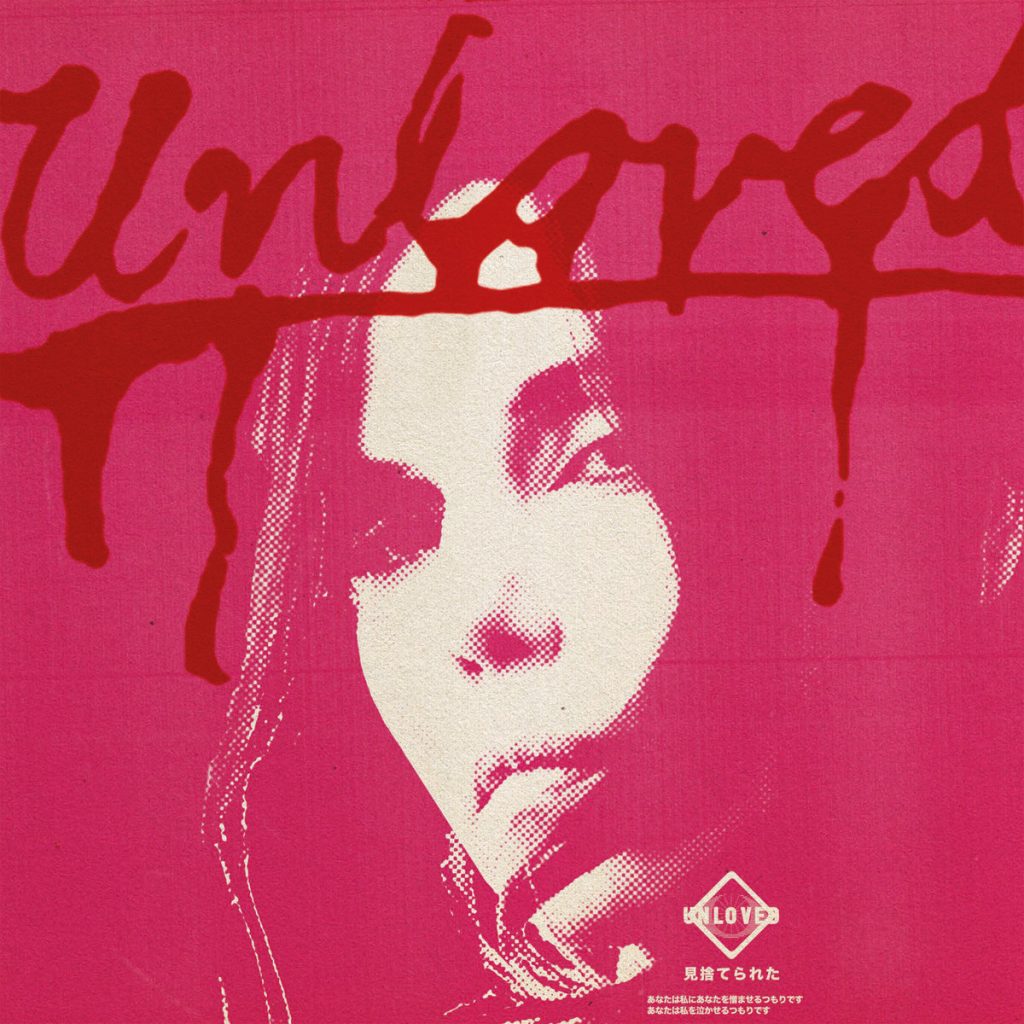
Unloved – The Pink Album (Heavenly)

There’s no stopping Homer… Belfast legend David Holmes is a producer, DJ, film score composer and a recording artist in his own right. As part of this Los Angeles trio however, alongside musician Keefus Ciancia and singer Jade Vincent, he’s making some of his best work to date. As well as their 3 albums, they have helped underscore the hugely successful ‘Killing Eve’ television show. So if you’ve seen that programme, you have already heard Unloved whether you know it or not. Theirs is a retro-futurist netherworld that pulls in 60’s girl-groups, 90’s shoegaze, electronica, hip-hop and the darker side of dramatic chanson. Vincent’s sultry, deadpan vocal belies the emotional and confessional heartbreak at the centre of most of their songs. These are raw, honest soundscapes that deal with love, sex and death – what else is there? ‘The Pink Album’ is a luscious 22 track epic, documenting their bittersweet worldview.

The Strange Blue Dreams – Simple Machine (Holy Smokes)

I once described this band as a ‘Glaswegian version of the legendary pop, Rock’n’Roll and country A-team session aces of the late 1950’s’, and this new album definitely cements that reputation. Their 2nd album bristles with deft musicianship and the kind of songwriting rarely heard in the 21st Century. Beautifully accomplished roots music, ‘Simple Machine’ sees the group rifle through any golden age, genre or style they so choose – Tin Pan Alley, 50’s doo-wop, gypsy jazz, surf twang, country swing and 60’s balladry is all up for grabs. Sidestepping the mainstream and creating their own world of retro pleasures, the songs on this album are so immediate and infectious that their burgeoning fanbase and status is truly deserved. Check out ‘A Good Day’, ‘Man’s Game’, ‘Strange Paradise’ or the title track for absolute proof of their sweet reverie – not so simple, but very effective.

The Heads – Under Sided – Deluxe (Rooster)

Loved by John Peel, Stewart Lee and Mudhoney – do you need a better recommendation? The Heads are the secret heroes of high-octane, acid-tinged, wild-man, Rock’n’Roll freakout; formed in 1990 in the shadow of fellow psych-lords Spacemen 3, Thee Hypnotics and Loop. This massive reissue, across a boxset and 2-disc vinyl and CD sets, revisits their seminal 2002 album on its 20th anniversary. For the uninitiated, there’s pinch of the MC5, a soupcon of Hawkwind, and a liberal sprinkling of Blue Cheer. If you like it loud, despondent and unrelenting then this band are for you. Occasionally taking to stages once again (they supported fan-boys Mudhoney recently), the Bristol cult heroes are hopefully about to gain the respect they deserve and also wreck the eardrums of a new generation of stoner-rock fanatics. Get something feral and untamed in your collection. 

Port Sulphur – Speed of Life (Creeping Bent)

With Scottish post-punk Svengali, label-boss and now author (check out the recently published ‘Hungry Beat’) Douglas McIntyre at the helm, Port Sulphur are a collective of musicians on a mission to sail their own sea. Following their ‘Compendium’ release (made up of the ‘Paranoic Critical’ album and 2 EP’s) that saw visionary collaborations with the likes of Alan Vega, Gareth Sager, Vic Godard, Davy Henderson, James Kirk and others; this new work was written ‘automatically’ with first ideas kept, no rehearsals undertaken and an immediate recording laid down on tape, using Lou Reed’s ‘ostrich’ guitar tuning. The results, almost entirely instrumental, are electrifying. Motorik rhythms, surf guitar twang, propulsive synths and rich melodies throughout make this a surprisingly concise, succinct and inspiring listen. The spirits of Bowie, Neu! and Magazine haunt this brilliant album, so hop on board and enjoy a ride in the fast lane.

No Age – People Helping People (Drag City)

Now reaching band ‘adulthood’, having formed in 2005, Los Angeles duo Dean Spunt and Randy Randall continue their wayward, psychedelic journey on their 6th album. Theirs is a world of DIY art-punk that draws on guitar and drum thrash one moment and washed-out, sampled ambience the next. Spoken word, musique concrete and Wire-esque blasts of minimalism punctuate their freeform noise-pop. Continually pushing in all directions, this new collection brings to mind Cosmic German pioneers Faust and Harmonia on certain tracks, and a young, angry Lou Reed on others. It’s certainly an eclectic collection, with the duo recording and self-producing throughout. You can almost physically feel their constant search for freedom on each cut. Utterly uncompromising and raw, this album is a lo-fi lesson in sonic deconstruction.

Dehd – Blue Skies (Fat Possum)

In the increasingly crowded world of indie-rock and post-punk in 2022, bands now need to bring something new to the table or at least write, record and perform with a heartfelt passion. Dehd do a little of the former and lots of the latter, relying heavily on minimal drums, reverb-drenched neo-surf guitars and singer Emily Kempf’s untamed holler high in the mix. Although sparse and skeletal in structure, the songs frequently sound like mini classics, occasionally tapping into familiar 50’s and 60’s shapes but bringing a modern chant-a-long, anthemic quality to them. In amongst the shared call & response vocals, Kempf channels Patti Smith at times, whether on purpose or not, and the songs sometimes resemble Galaxie 500 taking on Springsteen at his most primal. It’s an oddly addictive concoction they create, and is paying off as their global audience grows. ‘Blue Skies’ follows perfectly on from their 2020 album ‘Flower of Devotion’ and deserves your ears.

Hailey Beavis – I’ll put you where the trombone slides (OK Pal)

Against odds and obstacles, Edinburgh based songwriter Hailey Beavis has secreted herself away to work on this debut album for a few years, having reinvented herself as an artist after experiencing a darker side to the music industry. Emerging stronger and more focused, this intriguingly titled album displays a confessional songwriting, housed in beguiling and unusual arrangements. At the heart of it, she is an acoustic performer and fits the ‘indie-folk’ genre loosely. However, the varied instrumentation and sounds on display show her ambition and foresight – strings, electronics, synths and distorted guitars all enter the fray and the results bring to mind undoubted influences such as Kate Bush, Jeff Buckley and Tori Amos. Beavis has her own take on things however, drawing you into tracks such as ‘Crow’, ‘Anything that Shines’ and ‘Back to the Water’. An album that is assured, inventive and full of emotion.

DJ Food’s Music Reviews

Unknown Genre – Elevator Ride 12”/DL (Other Goodness) 

Andrew ‘Emperor Machine’ Meecham and Sean ‘A Love From Outer Space’ Johnston make up Unknown Genre and craft a beautiful couple of downtempo floor chuggers with touches of acid and timbale percussion amongst the sinister synth work. The Orielles turn in an ambient mix to round the release out which has shades of the early 90’s definition of ambient where Higher Intelligence Agency met Peter Namlook’s Fax Records. This is still only Other Goodness’ 5th release, the label starting in 2020, putting out releases by Bawrut and Margee as well as remixes from Future Beat Alliance and Hardaway Bros (another Johnston alias).

Group Modular – Per Aspera / Ad Astra 7” (Delights)

It’s usually around Halloween when a new Delights 45 is due but this one dropped through the letterbox in July – the seasons are all mixed up these days so who cares. Markey’s Group Modular alias (alongside Mule Driver) is now ten years old and they celebrate with a couple of new tracks on the 21st release from his label. Translating roughly as “Our aspirations take us to the stars”, both sides are driven by a pulsing synth bass line and halftime beat whilst Carpenter-esque top end melodies circle above, never outstaying their welcome, soundtracking some dark corner of the galaxy, beamed from their Jerusalem base. 


WTCHCRFT – Drugs Here 12” (Balkan Vinyl) 

Very dark, funky acid 4-tracker on one of the best purveyors of contemporary acid on the scene, Balkan Vinyl. Hard to pick a favourite out of these as they all bang hard but ‘Uhmm’ stands out as something that should be maddening with its repeated vocal refrain of ‘Uhmm, why would you?’ but builds and builds with huge snare rolls like it’s the 90s again. Also look out for the first in a new series of 7”s from the label, ‘Kanlab 01’ by Suddi Raval.

Hooverian Blur – Confusions EP 12”/DL (Yellow Machines) 

Dexorcist – Night Watch EP 12”/DL (Yellow Machines)

Hooverian Blur was one of the stand out tracks on the recent BLE-EP compilation on Jude Greenaway’s Yellow Machines label and this EP sees him producing four tracks of pinpoint precision techno. Finely honed of any fat, these sleek constructions roll, click, bleep, clap and stomp out the box with only a breakbeat on ‘Splash’ to soil the carpet.

Dexorcist is a far dirtier affair with proper banging early 90’s sub bass bottom end, bleeps, breaks and one-finger melodies. Bringing the hardcore over from the Modified Magic sub-label, this is contemporary rave music with one foot firmly in the past and the other in today’s production techniques and my god it’s glorious. Hard to pick a favourite from the 4 tracks but each one should ensure maximum dance floor destruction.


Dexorcist is a far dirtier affair with proper banging early 90’s sub bass bottom end, bleeps, breaks and one-finger melodies. Bringing the hardcore over from the Modified Magic sub-label, this is contemporary rave music with one foot firmly in the past and the other in today’s production techniques and my god it’s glorious. Hard to pick a favourite from the 4 tracks but each one should ensure maximum dance floor destruction.


Clipping. – CLBBNG EP DL (Sub Pop)

Clipping go clubbing with a download only 4 track ‘dance remix’ selection. Created for their tiny desk concert and the first volume of a possible series – with two mixes of ‘Nothing Is Safe’ and two tracks their self-titled debut, each nail the 4/4 kick early on and garnish with acid whilst Daveed Diggs expertly flows over the beats. 

John Leckie’s Classic Album Review

The Incredible String Band : 1000 Spirits or The Layers of The Onion 1967


The Incredible String Band are a bit like Marmite…you love them or hate them. How can you be into Stockhausen and Hendrix and be a String Band freak? Many of my friends were (and still are!) This is the cover to their second album called 1000 Spirits or The Layers of The Onion and was designed by The Fool who decorated The Beatles Apple shop, painted John Lennon’s Rolls Royce, Eric Clapton’s guitars and even made an album produced by George. Along with Nigel Weymouth and Haphash and The Coloured Coat they were the top psychedelic designers in ’67.

I don’t think this is their best album… I’d go for Wee Tam and The Big Huge but many prefer The Hangman’s Beautiful Daughter.

The band started at Clive’s Incredible Folk Club in Glasgow. Clive Palmer was a revered beatnik banjo player and a librarian of all things sacred and weird about music yet he had a simplicity and innocence that was the heart of Incredible String Band music. After the first album he cleared off to Afghanistan and left Robin Williamson (a UK national treasure..?) and Mike Heron (a soul man…) to continue. 

They were discovered by the great Joe Boyd who was the A&R, manager and producer of all their records. They recorded at Sound Techniques for Electra and, later, Island Records. Joe took them to Woodstock Festival in 1969 and they should have been on the main stage at peak headline time on the Friday. The rain came down and they wouldn’t go on stage so they left it until the next night. Unfortunately for them, that was when the rock bands were on and they just flopped and were edited out of the film. 

But they were beyond hipness and adored by everyone from The Beatles to Zeppelin. The Stones wanted them on their label and Pet Shop Boys say they love them. In 1968, they were the hippest hippies going! They looked beautiful. The band at their best were two girls and two blokes and we all wanted to be like them with our girlfriends. Rose was sort of with Mike and she played bass and keyboards. Licorice was kind of with Robin and played and sang in a silly high voice which just fitted the songs. The gigs were happy, improvised affairs and they always felt like your friends. They toured the world and spread peace and love wherever they went.

The music and songs were always full of surprises. With twists and turns in the story telling and instrumentation, each had a riddle to be answered and a trip to be savoured.

Whether the song was written by Robin or Mike, the lyrics had a deep meaning and spoke of fantasy, other realms, ancient Druid ways, harmony and a balance and a natural life which we were all into. But they could rock out too: Mike Heron did a solo album called Smiling Men With Bad Reputations with The Who backing him and other tracks with Jimmy Page, John Cale, Ronnie Lane and Richard Thompson. They made a film called Be Glad and a big theatre thing called U but by that time in 1971 they got dancers in and more blokes. The girls left and they replaced the hashish with Scientology and it just fizzled. But for those few years at the end of 60s, we loved them…and still do. I know all the words !

Listen to: A Very Cellular Song, Douglas Traherne Hardy, Maya, The Iron Stone, First Girl I Loved and The Half Remarkable Question. 

John Leckie

Eclectica – Joe Muggs Music Reviews


 Lucretia Dalt

¡Ay!

RVNG Intl

Is Lucretia Dalt getting her groove on? Kind of! Her work over multiple albums and soundtracks has always had the influence of her native Colombia incorporated as an essence within complex abstractions. Here, though, the bolero, mambo, salsa, and merengue are vividly present – albeit slowed down, stretched and dubbed out, turned otherworldly in the manner of Tom Waits’s junkyard percussion records. 

Dawn Richard & Spencer Zahn 

Pigments

Merge

New Orleans singer-songwriter Dawn Richard’s creative path is one of the most fascinating in modern music. From P Diddy-mentored mainstream R&B TV talent show graduate, through wildly experimental electronic soul albums featuring the likes of Machinedrum and Hudson Mohawke, to now teaming up with NYC’s Spencer Zahn for an almost beatless album of cosmic hymns. With Zahn’s meandering sax leading as much as Richard’s voice, it’s unbelievably lush: an album to float away into. 

Mehmet Aslan

The Sun is Parallel

Planisphere Editorial

This debut album from the Swiss-Turkish producer Aslan really feels like cultural meltdown should feel. There’s sun-bleached Balearic dub, there’s Middle Eastern folk, there’s sleazy EBM, there’s relentlessly hypnotic post-rock, there’s crawling Twin Peaks torch song vibes, there’s rarefied ambient sketches – but it completely holds together as a single piece. Truly exciting stuff.

Angélica Salvi

Habitat

Lovers & Lollipops

LA’s wildly collaborative Mary Lattimore, the Caribbean-Belgian sensation Nala Sinephro, and now Angélica Salvi from Porto are all redefining the harp. Like much of work of the former two, Salvi turns her playing into borderline ambient music – her minimalist phrases sounding almost digitally generated, until suddenly they’ll wind down into something altogether more organic. But there’s something very ancient at work here – in the sections here where studio processing falls away, so do the centuries…

Plaid

Feorm Falorx

WARP

30 years and 11 albums into their relationship with WARP Plaid continue to achieve the miraculous by still sounding fresh. This latest, while on the gentler side of their output, is recognisably Plaid in every way – especially in the contrapuntal melodies – yet their synthesis is sharper, their range of influences is wider (krautrock! calypso jazz fusion!) and their sense of playfulness shines brighter than ever.

Single Review: Gurriers, Approachable.

Gurriers. Remember the name because they are starting to cause a stir. They’re raging, visceral and their riffs will make you punch the air. 

Synthesise the raw ferocity of a (melodic) Metz with the confident rock n roll swagger of early Black Rebel Motorcycle Club and you can start to get the idea of Gurriers’ debut single, Approachable. The twin guitar intro twists the tension dial to 10 and I’m already visualising lead singer, Dan Hoff, tense and agitated. Listen to them for what they are: five friends playing as one with collective and individual freedom. It’s distorted, intoxicating and it really doesn’t have the time or inclination to fuck around. 

Dan explains: “Approachable is a tongue in cheek anthem about the rising far right rhetoric all over the world.”

Thrilling, essential stuff.

Giles Sibbald

Gurriers are:

Dan Hoff

Emmet White

Ben O’Neill

Mark MacCormack

Pierce Callaghan

Photography – Evan Cahill

Approachable  – Click to Buy or Listen

CONNECT
Instagram | Twitter | Facebook | Bandcamp

Album Review: En Attendant Ana

Principia – out now on Trouble in Mind Records

I’m glad to report that all is well in the En Attendant Ana camp. The Parisian quintet are back with Principia, their third and, in my opinion, best record yet.

According to vocalist and principal songwriter, Margaux Bouchaudon, the songs were composed from a place of confusion about the state of the world and her place in it, looking outward and inward for answers. They question our perception of others, the one they have of us and finally the one we have of ourselves in a society where the individual is king and the group is forgotten.

Principia is full of stylish melodies and harmonies that find their way into your ear with a gloriously nonchalant yet confident push. When I hear their music, I wanna hear each instrument given their own space: the vintage organ that fizzes and swirls, the elasticated, slinking bass locking with the metronomic, precise swing of the drums, the yearning and sensuality of the trumpet and sax anchored together by Margaux’s contemplative vocals. They’ve achieved this with a beauty, a confidence, vulnerability, a joy and a poignancy, none more so than on Wonder – it’s their What Goes On – and it feels good.

Giles Sibbald

En Attendant Ana are:

Margaux Bouchaudon – vocals

Maxence Tomasso – guitar

Camille Fréchou – trumpet, sax, synths, vocals

Vincent Hivert – bass

Adrien Pollin – drums

FFO Electrelane, Stereolab & Laetitia Sadier, Cate Le Bon, Frankie Cosmos, Deerhunter, Yo la Tengo, Black Country New Road

CONNECT
Instagram | Twitter | Facebook | Bandcamp | Label Site

Photography – Arno Muller

The Future is Forever Lilac and Black

When you hear and fall in love with those musicians who have combined poetic storytelling with music that shows deep respect and love for its wonderful diversity of guises. That feeling, y’know? Rock ‘n’ roll has always been the haven of outsiders of those who won’t conform, a community, a gang where you can feel safe being yourself. It means rebellion. But time doesn’t stand still. And neither does prejudice. As I write this, the US Supreme Court has disregarded precedent and any evidence-based concerns to overturn Roe v Wade and already, all abortions are banned in at least nine US states. I have no doubt that the attack on our most basic human rights doesn’t end here. This is about fear and retention of power for the privileged few. The targets are already lined up –queer people, trans people, people of colour and even interracial marriage. 

Can the new generation of storytellers offer a vision of collective survival when the establishment is hell-bent on driving wedges between communities? Ezra Furman has been zeroing in on the light that sparks when struggling people find each other and ease each other’s course. Her music makes you want to bounce around your house all day.

Her forthcoming LP, All Of Us Flames, is a document that talks of community, networks of care, resistance, and survival. It’s at times thunderous, at times fragile and always stunningly beautiful.

Ezra: “This is a first-person plural album. It’s a queer album for the stage of life when you start to understand that you are not a lone wolf but depend on finding your family, your people, and how you work as part of a larger whole. I wanted to make songs for use by threatened communities, particularly those I belong to: trans people and Jews. People who have been through a personal apocalypse or two have something to teach them. The world doesn’t end, shit just happens, and if we don’t die, we have to take care of each other.”

“I’m really happy I’m this confident in the record itself. I’m also pretty damn confident in our live performance. It’s the best that I’ve done, I think. But what I’m interested in, you know, might not be what other people are interested in. And I’m curious to see if people like it.”

Giles: It’s noticeable that a lot of the record is written in the first person plural, which brings a sense of togetherness and community.

Ezra: Maybe solidarity is the term. Writing the songs and the lyrics is very much like seeing what happens. I don’t go in with a plan -like ‘we should be writing about this, or this is the kind of record I want to make next.’ It’s not like that. It’s really like, ‘what’s there?’ And now, I recognise some of the influences on why I’d be writing in the first-person plural, you know, it’s kind of a life stage thing and what stage of human civilisation we’re in right now kind of thing. But it’s amazing how my songwriting mind – by which I mean my unconscious – knows what to do before I’ve even thought about it. And then I can see it in retrospect through the lyrics like “Ah, I was trying to lean in this way.”

Giles: Is this just instinctive?

Ezra: Yeah, all the ambitious parts of making a record, I think, come a little later. I don’t start with any ambition. 

Ezra pauses, as she often does, carefully and considerately choosing her words. 

“I wasn’t really trying to write a record. At first, I wasn’t trying to come up with new stuff to release. Really. I had a lot on my plate. I am a parent of a young child and still working for the Netflix TV show Sex Education (for which she wrote the fabulous soundtrack). But I just thought, well, let’s see what’s in here. Let’s see what’s in the skull. And usually, like, stuff comes out, I write some stuff, write a song or write half a song. Then, I’m like, ‘This sucks. It’s terrible.’ I try to write a lot, and most of it’s bad. So, I throw it away. I’ve learned that that’s not what it’s like for many songwriters. Not everybody throws things away as much as I do.

Giles: Do you properly throw those things away, or do you put them on the shelf and think, ‘oh, I’ll maybe come back to that’?

Ezra: I do usually keep the demo or whatever I started. Because that’s the other thing: it’s my first assessment of what I did. I’m like, ‘that’s horrible’. I was trying to write a song as good as Blue by Joni Mitchell, and it’s horrible. And then I’m like, that was a failure, put it away. Five months later, I look into my phone, and I’m like, ‘Well, what’s this like?’ And by then, I’m no longer attached to what I hoped it would be, and I think, ‘oh, this is interesting and good’. I think that’s a very common process. But really, there’s a million ways it happens to write songs. And I still feel like I don’t know how to do it.

The key to being an artist is to get past that stage of hating what you do. Most people who want to be an artist and don’t end up doing it are like, ‘I don’t know, I’m not good at it.’ They don’t get past that phase. And I think artists know that everyone – well, maybe not like Prince or something {laughs} – are like, ‘Oh, I hate this’. You hate whatever you do. And you only hate it because you were there for the whole stupid, humiliating process of trying to come up with it. Which I do think is humiliating. I always feel that way. I always hope nobody’s listening when I’m making sounds in here.”

I mention to Ezra that the combination of lyrics and music on ‘All Of Us Flames’ gives me many different feelings: resistance, hope, strength, and empathy. When I mention that there’s also a bit of resentment, she indicates that I could probably turn up the level on that dial.

It seems oddly less personal for me. But I guess, in a way, it’s very emotional, without being very confessional – leaving aside the last song, which is hyper-confessional. That’s a quality I think that I aspire to. It’s my dream that I could write iconic songs. Songs that are portable that somebody else could sing. And you wouldn’t have had to have heard of me or heard anything about me. I think there’s more of that quality on this, you know? I feel competitive about songwriting, actually. I don’t talk about this much. You know, I always thought that if you don’t like some kind of music that’s not for you – you just missed the point. But anytime somebody makes a corny-ass song, I’m like, how are you letting that through?!  Like, that’s corny and not up to par, you know?

I won’t name names, but it’s people who’ve done good stuff before. I’m like, ‘Just wait. Just wait another two years and keep writing; just don’t put THAT out!’  Be like Fiona Apple. She makes you wait until she’s written something on fire, you know. I just think about that because I’m like, yeah, of course, I’d wait ten years to write ‘Dance Me to the End of Love’ or Joni Mitchell’s ‘Blue’. Why don’t people try for that? I’m secretly quite ambitious and a little petty even about this stuff.

Giles: In the last issue, we featured Alice Nutter (who was in Chumbawamba and is a screenwriter now). She said many things that resonated with me, but one in particular of relevance to you and the new record, perhaps. She said they felt like they were in a gang together because they all dressed in black, they looked different from the rest of the people in their town, they lived in a squat, they ate together, they went everywhere together, and they shared all their money. She said that the feeling of being in a gang is so powerful. Even as outsiders, they felt invincible. 

Ezra: What a wonderful thing they existed – and then went to the top of the charts!? I love their anti-Nazi song “The Day The Nazi Died”. To your point, I think Alice’s experience is part of a related but maybe different thing – being in a band is such a little tight group. But I get it. With the new record, I was trying to bring across the feeling of being in a community that is threatened or has to look out for each other, or might not look out for each other, but has an insurgent will to change the world. You destroy and fight back. And, I mean, that feeling is like why punk happened. Punk music was the first music I loved as my music, not my parents’. I was 12 years old; I’d heard Green Day, and then somehow, Green Day led me straight to the Sex Pistols. I feel lucky about that. I don’t know how it exactly happened – maybe they were the next band on VH1 or something {smirks}. So, I guess I started to understand that we’re going to need that sort of feeling. Like, for one thing, being Jewish: we have a legacy of that feeling that it’s us against the world, and especially being trans, I don’t know, you just hear about trans people getting killed all the time. Or death by suicide or death by poverty. And then, of course, America – just like everyone in the West – has become obsessed with trans people. Our healthcare is now a political wedge, which is a nightmare situation. So, it puts you into this mode of ‘If anyone tries to hurt my trans friend, don’t hold me back,’ you know. Especially because I see my friends get hurt, that’s why we’re starting (the new record) with Train Comes Through and Throne, and that’s why I would write a song about the violent queer girl gang with gang colours called Lilac and Black. I knew I was writing well on this topic, and I had something to say. But I hate that being trans and out sort of self-selects a personality that’s willing to be like, ‘Fuck everybody, this is what I’m doing’ and ‘It’s me against the world’, you know? I do have that myself by necessity, and it’s also in my blood a bit, which is why I liked punk rock when I was 12. But my point is that I don’t want to be like that all the time. I’m not a stridently angry person normally. I don’t want to walk into a room and cause chaos or something. I know some people do want that, but being in the public eye makes my personal life into a miniature war, you know?

Giles: It’s got to be mentally debilitating to live your life where it’s confrontational all the time, and even more so when you are in the public eye.

Ezra: {laughs ironically} What was I thinking?

Giles: But at the same time, some issues need addressing for trans people and marginalised people, issues that need fighting for – you mentioned health care, there’s also education and jobs. The sort of things that many people take for granted and assume are fundamental human rights. The capitalist ideology and fear that generates has gone so far down the track now that the ruling elite are so overtly ‘fuck everybody else apart from number one’.

Ezra: Yeah, that’s the guiding ethos of capitalism – fuck everybody else and make as much money as you can, regardless of whom you hurt. And it might end the species. You can’t talk about it without sounding alarmist, but it’s gotten to like, I don’t know, we’re on the verge of civilisational suicide at the hands of very few people – the most powerful, nihilistic people. And some of them know that they’re evil, and some of them, well, I don’t think they know how evil they are, and I don’t think they know the difference between good and evil. And that’s the kind of thing that makes me want to be a spiritual person and make sure that right and wrong still get taught to our youth. 

Giles: One area that causes tension is when corporates and brands get involved in such social issues or “causes”. On one hand, I am cynical about their true motivation, but on the other hand, I am sympathetic to those employees who want the values of their employer to be aligned with theirs.

Ezra: If corporates are helping, I don’t think they’re not helping very much. I wrote that lyric at the end of our record: “What do your rainbows do? What do your bright flags do? What do your rainbows do here on the ground?” Corporate promotions are just like cities: I was thinking of the historic neighbourhood in Chicago called Boys Town, where rainbow flags are now hanging up everywhere. And it was just always gay bars in this neighbourhood. And okay, now they have rainbow flags hanging up, but there are still homeless people asking me for a handjob, and we’re both in desperate pain. That’s what I am often thinking about. They got the profit motive going on, and you need to look no further than that. There might be plenty of people who work there who genuinely care about queer issues and have queer relatives whom they love, but the company would not be doing anything that didn’t make it more money. I want to bring back early ‘90s style, corporate scepticism, you know, I almost want to bring back the term sellout because that was there for a reason. It was like a culture among artists and punk rockers and weirdos and queer people to be like, ‘do not trust that corporation, you don’t matter, they’re gonna kill you. Like literally, they’re gonna kill you.’ I’d like to encourage courage in your readership.”

This reminds me that I have failed yet again to tell Ezra about the origins and ethos of MU. And not for the first time, she hoists me from the depths of embarrassment.

Ezra: I like that you didn’t tell me about the magazine till now because you can trust that I just said all that stuff about encouraging your readers to be courageous without any influence, so I hope I encapsulated it! I used to love print magazines. I mean, I still get the New Yorker. I always pick up music magazines when they have any value, content wise. There are probably some that are still decent, I guess. Maybe.

Giles: I often think that age is another area where we have been divided by “the system”. Products are advertised with a subtle or not-so-subtle exclusionary bias. I think this tends to create these unconscious biases in our own mind, which makes us sometimes dismissive of what other generations have to offer. Imagine if we were allowed to think for ourselves….

Ezra: Yeah, that’s insane. I toured with Nada Surf in, I think, 2012. I’d never met them before, and I was touring for six weeks {laughs}. It was phenomenal. They’re quite a bit older than me, but I really valued that chance to hang out with them and learn some stuff. I mean, I hang out with a lot of young people, too. It’s kind of important to me to not just hang out with people my age. It’s almost baked into us that you’re almost supposed to disdain older people when you’re younger. It’s like, tradition. The dumbest slogan of all time from the 60s is “Don’t trust anyone over 30”. It’s phenomenal. Like, 26-year-olds are saying this, you know! It just blows my mind whenever I hear that slogan. And like, their heroes are John Lennon! Anyway, it’s ridiculous. But it is funny because people take corporate culture and think they thought it up as music fans – no, hang on, it was marketed to you in that category! My music career started when I was a teenager, and my parents or dad would take me to open mic nights. As an aside, my dad – and I feel like I don’t say it enough – is one of the biggest influences on my becoming a professional artist. They always were rooting for me from early on to make music, even though they didn’t do anything like that.

Anyway, so my dad would take me on these open mic nights, and I played my first teenage songs. I liked it because, like, you know, going to open mic nights, it’s just like dudes in their 20s playing Imagine, and it’s horrible, and then they see you. They come up to you, and they’re like, ‘that was actually good’, you know, and I’m like ‘hell yeah, fuck you, everybody, I’m the best, and I’m a 16-year-old brat’ {laughs}. But at one of these open mic nights, the guy who booked the venue – Mitch Marlow – was watching. And he came up to me and was like, ‘Look, I manage this other band around here. If you want to do music – ever – you can give me a call’, and he gave me his phone number. 

I waited over a year – I was probably 18 then – and I called him. And I was like, ‘I think maybe I want to do music’. And then, he became my first manager and one of my most trusted best friends. He was in his 40s, and I was a teenager. He got someone he knew who was vice president of a Chicago indie label to come to our show. And they were like ‘let’s sign this artist’, you know? He basically got us our first gigs – a tour when we were 19. Anyway, so knowing this person changed my life. I learned so much just from talking to him for hours and hours about the history of Chicago alternative, punky, art rock, you know? And from that moment on, I was disdainful of anyone who didn’t want to get to know older people.

By speaking out about the lack of role models for trans parenthood and a scarcity of visions for moving through adulthood as a trans parent, Ezra has put herself at the centre of the obsession with and hostility towards trans people. I can sense the weight of the competing factors that she shoulders: increasing public awareness of the many issues facing trans people; being seen as a role model; support and solidarity for trans people; personal privacy and security; living a happy life; thriving as a musician. It’s a lot to deal with.

Ezra: The actual argument is about bodily autonomy. I don’t understand how this conversation about abortion and the moves that are being made by the government are not being fueled by anti-trans groups. If you’re not allowed to follow doctor’s advice to take care of yourself as a trans person, if you don’t have that right anymore, then the right to abortion is not far behind. It’s one step away; you know what I mean? And I do wish people understood that, especially anti-trans feminists. I also think that CIS people who haven’t heard from a trans person about these issues – which are in the news every day – should maybe do that once in a while. 

I had a tough time deciding how to present myself to the world image-wise. I think you’ll notice I’m not appearing in my music videos, and I’m not on the album cover – not the front cover anyway. So, I’ve been feeling self-conscious and afraid. Talking shit about me on the internet, like, a vomiting emoji under a picture of me or something, doesn’t make me not want to be transgender. It just makes me weaker. It just hurts me. It makes me less able to go out in public; maybe that’s the idea. But it fucks up my day. I know I’m not supposed to care. I’m supposed to be like, ‘it doesn’t matter what anybody says; keep going, you do, you girl’. But it hurts me. A lot of that stuff really got under my skin, and it’s still under my skin. So that’s part of how I’m feeling, you know. Part of me sounds alarm bells like, ‘Why do you want to be seen in public? Why do you want to do that to yourself again?’ 

Giles Sibbald: Do you feel like you’re coping better?

Ezra Furman: {Pauses} Yeah. In a way. I mean, I’m a lot better at, like, just turning away from it or not scrolling down to see any YouTube comments and stuff like that. I feel way better walking through the world than I did two years ago. But yeah, on a large scale, you know, being on a magazine cover, a news website, or something. I’m just, like {shakes head}, that’s a lot. It’s punishing. 

Giles: Are you ready?

Ezra: Yeah, I’m ready. I can take it. And I will take it; I will continue to take it as long as it’s worth it. And I think it’ll continue to be worth it. You know, something that was impactful on my mindset was while we were in the desert – actually making the doing demos for the album – and I made that social media post which went something like, ‘Hey, I haven’t told anyone this, but I’m a mom, I have a kid, and I’m a trans woman. I wasn’t going to tell anyone about being a parent, but we never see, you know, different kinds of futures and possibilities for us. When I became a parent, I had never even seen a picture of a trans woman mom. So, here’s a picture of me.’ Of course, I’ve been morbidly reading about suicide rates among trans people, but I was like, okay, I think it’s worth telling people this. It’s still utterly baffling to me that it got picked up by, I think, the Guardian first. And then it was like Fox News and People Magazine. And then, on TV – the Today Show. I don’t understand it. I’m very mildly, a tiny bit famous. I’m not like Fox News or CNN famous at all.

Anyway, so then a waterfall of like transphobic comments came in from just people because the algorithm just brought it up into their feed like trash in the sea. So, it was dragging me down, but the mission, which was to get a picture of a trans parent in front of as many people as possible, was fulfilled tenfold. So, I internalised everything, you know, like if I weather the punishing bullshit, then I win. But that’s also a horrible pressure to put on myself. So, we made the album right after that while I was dealing with it. You know, I’m doing vocal takes on this album, and I’m looking at my phone, and I’m like, ‘you’re going to hell’. So, it does seem like it’s in the DNA of the album or something. I felt this had to be a record that trans women can wear as armour. I hope that was what we made.

By Giles Sibbald 

All Of Us Flames is out on 26th August on Bella Union Records.

www.ezrafurman.com


Photography Tonje Thielsen

Words Giles Sibbald

Billy Nomates: bold vulnerability, instinctive humanity

By Giles Sibbald

“70-80% of being bold is about being vulnerable as hell”

There weren’t that many places of solace during the bleakness of those lockdowns. I sought out a few musicians who were determined to build communities of positivity and humanity and try to make sense of whatever the fuck was going on. Oh, and to jab persistently at the Cockwomble Cabal of Johnson, Hancock and T***p. Solidarity. #UKGRIM

As the situation brewed, a new songwriter and multi-instrumentalist called Billy Nomates released her debut single No, infectious in its minimalism, fusing a looped bass groove with rarefied synth interjections and her vocal delivery of her barbed lyrics through a mix of deadpan spoken word and imperious soul/jazz harmonies. 

“No is the greatest resistance

No to your nothing existence”

The vulnerability of Tor Maries’ work as Billy Nomates and her life was as apparent as the talent behind it. FNP and Hippy Elite preceded her highly successful debut album released in August 2020 on Geoff Barrow’s Invada label. 

The time is right for that sophomore album. Go and find your own narrative in the wonderful Cacti…..

Tor

It’s really odd because it was written a year ago – I’ve lived with it for a year! And now I’m gonna go and live with it for this whole year! It feels weird that people only just know about it. I’m very nervous about it is the truth. But it’s done, it’s happening and I’m just shutting my eyes!

Giles

Have you listened back to it?

Tor

I’m just starting rehearsals for the live dates that start in March. I’ll be introducing a bit of live guitar and stuff for them, so I am looking at it from that perspective, but I don’t listen to as a record now, God no, no, no! I try and avoid doing that with any records actually or with anything in general. Unless I’m working on something, I just go ‘ok, good, that’s done and dusted’. 

Giles

I guess you’ll end up with a body of work that can represent what you were feeling at that time in your life.

Tor

It really does. Cacti is probably the most like that…..well, I mean, I guess they all are, in a way. I think all art and all albums will do that, won’t they? But Cacti really is: I’ll never be thirty again and won’t be dealing with what I’ve felt for that. So, it feels like a real time capsule. It’s weird because I never really looked at music that way until I thought, ‘Oh, now I trap it, put it on a record and it’s f-o-r-e-v-e-r!’. You have a real moment as an artist where you go ‘Oh, God, I didn’t quite realise it’s f-o-r-e-v-e-r’. But anyway…(laughs)

Giles

Like ‘Why the FUCK did I say that? Did I really say that?’ I guess the way we use language changes over time as well.

Tor

Absolutely. And even just the way that you present yourself, the way you play with melody, the way you look at work is that the shape of everything changes. And that’s a good thing – it should do. But you have to try and not do the thing of like, ‘Oh, I was terrible.’ You have to just accept it and go ‘No, at the time. It was really good, that was me’. I think about this a lot, especially since doing Billy Nomates: we have it in our heads that music has to be really good in order to be acceptable. Like, everything has to be really, really good. No, it doesn’t work that way in the art world. I don’t go to an art gallery and want to see everything painted beautifully. I don’t want to see that. I want to see, like, the lines not meeting, I want to see the person that’s done the abstract thing. It’s weird that we don’t do that with music. We’re so unforgiving. Unless we think something’s really, really good, we’re like a bit blah, whatever…

Giles

Why do you think that is? 

Tor

I think there’s a misconception that what constitutes a good musician and therefore good music is being really masterful at an instrument or being a really masterful singer. Whereas, actually, it’s just a human endeavour – you are just throwing something at a canvas. Also, I think it’s a symptom of everyone being so fucking good at their instruments now, that that’s the base level. And so, you come at it with feelings and everyone’s like, ‘oh, that’s not executed very well.’ I dunno…..

Giles

I think one of your massive strengths is that the storytelling and humanity is not just present, it’s really at the fore. I think that’s so important. I think there are a significant number of people that really want music in their life that they can relate to, stuff they can say ‘fuck, yes, that’s me, that’s exactly what I’m going through’. 

Tor

I mean, I want it myself and I want it from bands and artists that I listen to. I’ve always wanted it. I’ve never looked for the ‘really good thing’. If someone tells me that something’s really good, I’ll immediately go and find something else (laughs). I really have always felt that way about music and art. If you think of the radio as the ‘gallery’, they don’t put the odd stuff on it. What gets onto the ‘gallery’ has to pass these quality control checks. I’ve always hated that, you know, because it just means that the odd stuff doesn’t make it. But then when I discover those oddball things, I’m like ‘this is it, this is the shit.’

Giles

When I used to get into a band  – well, still do! – and I’d buy their studio stuff, then they’d bring out a live album. I used to really love it when they’d play a wrong chord live or the drummer would play a different roll or something. And when a band makes a false start when they play live. I fucking love that. It made me think that these people making this amazing music were just human. It made me feel that it was ok to make mistakes and that maybe I could do what they were doing. In a way, it’s a little bit hopeful, isn’t it, it makes it real….

Tor

Totally! I’ve always felt like that, and I’ve always liked that idea that anyone could come to a show of mine and go like, ‘I could probably have a stab at that.’ That’d be fucking ace. Because that’s the whole point. I didn’t go to university and study this shit. I just did it. That’s how I think a lot of stuff genuinely comes about and yeah, it’s funny, isn’t it, that we always want the human touch? We always want it yet we’re kind of told otherwise, but actually, we crave it. And it’s the same with like, social media and everyone looking good. I definitely don’t want to see people looking that good (laughs).

Giles

What’s the demographic of your fanbase now? Is it a mixed bag? The reason I’m asking is that I’m interested in what the future will look like and there seems to be a bigger proportion of the younger generation – I’m thinking perhaps 11 and upwards – having the mentality and drive to do something about things that they see as wrong or unjust. And I’m wondering how they might be using music, art, poetry etc. for this… And so how you’re impacting them?

Tor

It’d be nice to think that I was in any way. 

Giles

I think you are. 

Tor

One of the reasons that I got really angry at The Guardian recently was because they said that my audience was basically 6 Music mums and dads in turtlenecks. It’s the opposite of that. It’s always been the opposite of that. One of the best things about my last tour was the audience because it was women that had come out as a group of women without their partners, it was young girls that had come with their dads, dads that had come with their mates. Grandparents that just fancied it. Just fuckin’ everyone. I met a lot of people from the queer and trans communities that just felt safe to come and enjoy. And like that shit is a real privilege, because you know that when you start seeing that, that’s when it’s bigger than you. There’s a responsibility. And that is why I kicked off about that article, because I was like, fuck you, it’s the opposite of that and whether you like the music or not at that point is irrelevant, because to be honest, everyone has just come out and everyone’s cool in a space. And we’re not a country that’s good with that.

Giles

I think that’s absolutely spot on. If you can create a space where you bring people together, whether through the music, through the relatability of what you’re singing about or through the safety that the crowd generates through its own vibe of acceptance and understanding.

Tor

It means everything to see that as well. Because you just don’t really see it in life anymore. It’s so fractured. It’s so vulnerable. We’re so ready to hate each. We’re more ready to hate each other than accept each other like always. It’s an absolute privilege to have audiences like that. The reason The Guardian article irks me was because they missed that by a mile. I’ve never seen such a diverse audience in my life.

Giles

When they miss it by so far, that makes you wonder what agenda they had in the first place…..

Tor

Well, the shit thing as well is that it was written by a woman, and I’ve had a lot of women writing snidey stuff about Billy Nomates from day one. The common misconception is often that it’s going to be men hating. But men are my biggest supporters. They come with their daughters, they come with their mates, and like, more often than not it’s been a fucking woman that just goes ‘what was she doing?’, you know?

Giles

Have you been able to work out why that is?

Tor

I don’t know. It’s just a bit of an unspoken thing. I do wanna say, though, that I get a lot of support from female artists, and it does feel like there’s a sisterhood around it. But misogyny isn’t just a male thing. That’s the truth. I’ve definitely experienced misogyny from women, where they’ve been quite hard on Billy Nomates. It’s not for them clearly, but also then wanting to discredit it in some way – really? I don’t know why we do it to each other. It’s the fucking last thing in the world that we need.

Giles

Makes you wonder about who’s really behind those ‘divide and conquer’ attacks – something systemic? I dunno. But, if you’re getting the open minds to your shows, those open to doing and creating, those wanting to make some change for themselves and others, and you can inspire just one of those coming to your show to use their talent, then that’s got to be a good result….

Tor

Oh, god, it’s always been about that. Yes, I want to make music and yes, this is cool. But, as I’m getting older as a human, I can start understanding that, actually, all it is about is just doing good for each other. That’s literally all we’ve got.


Giles

From a cultural point of view, music has suffered increasingly callous attacks from this government over the years, and the past two years were, like, a really good excuse for the power structures to attack even more brutally. How do you see music’s health in terms of, you know, still having the resilience to tackle the injustices that we face as a society?

Tor

I think it’s always been a driving force of community and, for as long as I can remember, music has always been about breaking down barriers. You know, everybody meeting up almost like World War Two style, you know, we’re playing football in the trenches for a bit and then we go back to killing each other and hating each other. And it feels like that that’s happening more than ever. I hope that it will be able to continue to build communities and create bonds. That feels really powerful, and I don’t think that gets enough credit. And it’s, I don’t know, I think, you know, we’re just so unbelievably fractured and divided and hateful. My next door neighbour is really pro-Brexit. I can’t talk to him about that. But we were talking the other day and we discovered that we both really like Ian Dury and The Blockheads. So, once we discovered that, now we can talk about music, and now we’re okay with each other. A small thing maybe, but it builds a bond.

Giles

When I’m thinking about this, I think, probably with misplaced romance, of the days of the kind of 60s where there were these radical groups that were popping up all over the place – you know like the MC5 in Detroit when their manager John Sinclair got them involved in the White Panthers, and the Combahee River Collective in the late 70s, and it feels like many more people were prepared to go to extraordinary lengths for their beliefs. I mean, in comparison to that, it feels like we’re really fucking timid and far less prepared to act on our convictions, doesn’t it?

Tor

Oh, God, I mean, it’s like a source of forever frustration where you’ll see protests in France, where they topple their government, and they stay out all night and they light flares in their hand and they’re all French and sexy and fucking ‘Come on, let’s do this!’. You’re just like ‘Why can’t we do that? When the fuck is that happening and where because I’ll be there’ I’ve never really felt that British in that respect. Because we have this real apathetic attitude towards everything. And it’s so frustrating. Take the ambulances for example. What will it actually take for us to protest? And then you’re in a herd mentality and you’re just on a train that’s going that way. You can say you want to get off, but you just keep going.

Giles

I read this quote from John Waters about counterculture. He says there is no counterculture because what used to be counterculture is now commercialised. And it’s true, it’s almost like once the system kind of gets into something, the thing dies. The impact of people like Vivienne Westwood and Pam Hogg through fashion and music – encouraging everyone to have their unique identity, to think and create for themselves and speaking out against over-consumption – should reverberate around the world for a long time. Even though Vivienne became a huge ‘brand’, she retained the ideal counter-culture ideology.

Tor

Yeah, the ‘system’ can kill things, but the resistance within that has to be that you just commit, and you truly fucking believe in it and that’s something that I feel like we have lost a bit of our willingness to commit to things, like being a goth or a cheerleader or a weirdo or outsider. I mean in life you still get that but – and it’s not even so much about the look – we seem to have lost that commitment to what it really means to ‘be a goth’, for example. We’re just very watered down – because we have access to everything, we can be a bit of everything and that can be a brilliant thing, but I do actually think but you do kind of miss that like raw ‘I am 100% this and I fucking believe that I am fucking Black Death!’

Giles

That’s an interesting point about identity I guess. Do you remember Chumbawamba?

Tor

Yeah, yeah.

Giles

Well, last year I interviewed Alice Nutter, one of the founders of the band, but they basically lived together in a squat in Leeds for many years. They all dressed in black, they ate together, they went out together, they obviously played the music together and they pooled their money. She said she just felt like she was part of this gang that was just looking out for each other which generated this very powerful feeling of untouchability. I just thought, ‘wow, what a positive story of identity’…

Tor

Yeah. Well, I remember I did a similar thing. I had a year living in like a squat when I first came to Bristol when I was about 19. It was an ex care home. You had to apply to live there. There were some people that went to Circomedia, so they were trying to be circus people, there were two people that made yurts for a living, someone owned a snake and I remember it got loose once. And I was there, and I’d just started playing a bit of music and I look back and it’s things like that. I felt fucking untouchable then. I really felt part of something. I was like, I don’t know what it’s like to be, you know, bohemian, but maybe this is it. And now squats don’t really exist, do they? Like, you’re fucked. The dole’s gone. Unless you’re making okay money, you’re just worried all the time. And they’re fucking coming for you. And it’s really hard. I’ve often wondered, is that me getting older and being more worried about things and being more financially savvy, or is that actually happening? But it’s happening, isn’t it?

Giles

As I’ve got older, I’ve definitely felt like I’m being more calculating with the risks I take than I used to when I was younger and then I start wondering if my circle so kind of insular that I don’t see what’s happening outside of that circle? But I think you’re right, it is happening and it is more dangerous now.

Tor

I think it is probably a bit of both, isn’t it? Because we do need to be even more careful. I don’t want to be on the streets. I do want to pay my rent. But it is happening because I don’t really know anyone left in those circles still doing that. But here’s a thing: what would be a really cool thought is that maybe like that there still people doing it. And it’s so underground that they’ve completely fucking gone off the grid and off the system. The idea that there are groups like that is cool as fuck (laughs).

Giles

How do you feel about going off grid and just getting back to nature outside of today’s system?

Tor

Oh yeah, I’ll be honest with you. I just want to make enough to be able to go and do that eventually. I feel like we’re all just commercial hippies at the minute. We’re all just going, ‘Yeah, I need to have enough to make sure I can do X, Y, and Z’ and then ‘see you later.’

Giles

In our first issue, Youth had a conversation with Penny Rimbaud. Penny was saying that his idea of activism is ‘nothingism’ which is allowing the situation to happen and then responding accordingly – kind of like an animal response to your surroundings where instinct matters.

Tor

Yeah, I mean, I think all you can do at the minute is just try your best to respond to the situation that you find yourself in, then look for the best possible avenue. It’s like a checklist of things, isn’t it? It’s like you go okay, what have I got? How do I get a bit more? How do I not sell everything? How do I become happy? No-one’s got the whole fucking thing ticked. Absolutely no one. Or, if they have, they’re on the verge of a fucking mental breakdown. But yeah, it’s so true – responding to what you’ve got when you’ve got it and that’s all you can do. And just try and make the best of that. I’m still renting at the moment in Bristol – sky high rent. I don’t love living in the city. I’m not a city person at all, but it’s functional. It allows me to do Billy Nomates and Billy Nomates is very fulfilling, but ultimately, on a human level, it’s all about it’s all about getting out of it all. You know, music’s always about escapism, you’re constantly escaping from reality with music, and then it gets deeper than that. And you go, ‘Oh, at some point, I’ll need to escape all of this as well.’ Like the walls will have to come off this as well.

Giles

If you do go off grid, would you still create music, but maybe perhaps for different reasons?

Tor

Oh, 100% I hope I always create music. I say this all the time – so much so that everyone is like ‘shut the fuck up’ (laughs) – but I wrote songs and music way before anyone was interested. And I’ll make it way after anyone’s interested. That always did it to me. If just 10 people heard it on my Bandcamp, that was enough. You have to unlearn everything. The music industry tells you to look at numbers, look at this, look at that. All bollocks. And you have to just remember why you make music in the first place. What’s it a response to? I’ll play this silly little game for a bit but there’s a bigger target at the end of it. There has to be. We’re born into this world, and we know all the old ways: we know a life without a computer, we know a life without mobile phones, we know a life without social media. All of these then get introduced to us. And we have this choice. I feel like people like me in their 30’s, we have this choice to make where it’s like ‘Are accepting this or are we rejecting it?’, and the world kind of went, ‘Well, if you don’t accept it, you won’t be part of it, and you won’t be able to work or anything’. So, we’ve accepted it. But we’re all aware that there’s a life without it. We do know that life. So, I feel like we’re all kind of wanting to go back to that we’re just, you know, we’re all using it now to go, ‘okay, there’ll be a cut off point for this life’. Like where I won’t have a phone at some point, and I will go back to the most primitive way of living to get by.

Giles

I think most people know that something isn’t right with the way we live, it comes to us all, just depends how long you last!

Tor

We know it in our bones. We know it. It’s the apathy again, of like, we know this is gonna be a fucking disaster. It’s already a mental health crisis for a lot of people, but this is only gonna get worse. It comes back to responding – how are we responding? Well, in that case, I’ve kind of got a 10 year plan (laughs)

Cacti is out on 13th January 2023 on Invada Records and is available here:

www.iambillynomates.com/store

The European tour starts on 14th March 2023 in Lille and comes to UK on 17th April at Cardiff Tramshed. All dates here:

www.iambillynomates.com/live 

Photography by Immy (photo 1)  & Eddie Whelan (photo 2)